Will AI Replace Entry-Level Jobs? Things Every Fresh Graduate Should Know
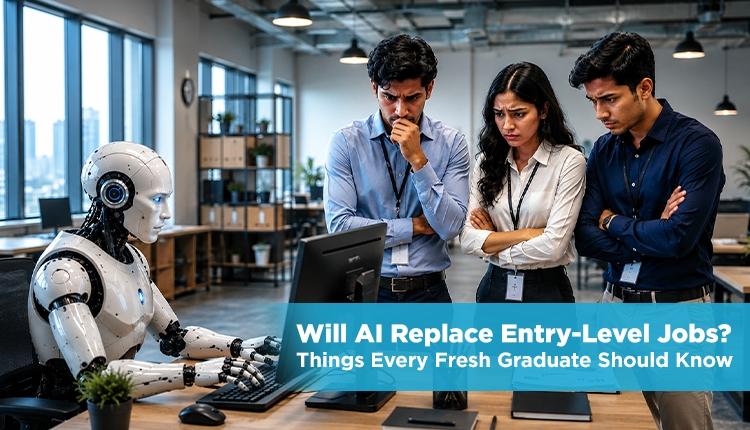
Artificial Intelligence (AI) is rapidly transforming the workplace, particularly for fresh graduates and early-career professionals. Companies are using AI to streamline hiring, training, and everyday operations, leading to significant changes in many entry-level positions.
According to a 2026 report by the World Economic Forum (WEF) and PwC, more than one in three (37%) young workers globally are employed in occupations where AI is expected to significantly change how work is performed.
The Reasons Behind Concerns About AI
Artificial Intelligence has advanced rapidly over the past few years. Today, AI can perform tasks such as writing emails, analyzing data, and handling customer inquiries, which leads many people to think that businesses may need fewer employees, especially in entry-level roles that involve routine or repetitive work.
According to the International Labour Organization (ILO), occupations involving routine clerical and administrative tasks have the highest exposure to generative AI. However, the organization also said that AI is more likely to reshape tasks within jobs than replace entire occupations. This means that although the nature of work is evolving, human skills such as critical thinking, communication, and decision-making remain essential in the workplace.
AI's Impact on the Employment Market
AI is transforming the job market across industries, including marketing, finance, customer service, healthcare, education, software development, and human resources. Businesses are also using AI-powered tools to automate repetitive tasks, analyze large amounts of data, improve customer support, and streamline recruitment processes.
As a result, the nature of work is changing. Instead of spending hours on routine activities, employees can focus more on strategic thinking, creativity, problem-solving, and decision-making. AI is becoming a productivity tool that enhances human work rather than replacing workers on a large scale. This shift is creating demand for professionals who can combine technical knowledge with human skills such as communication, critical thinking, and adaptability.
What AI Is Not Able to Replace
Even though AI continues to transform many workplaces all around the world, it still has limitations. AI works by identifying patterns and producing responses based on existing information, so it doesn’t understand emotions, build relationships, or make decisions by itself.
For example, an AI tool can help create a marketing campaign, but understanding customer needs and building meaningful connections with an audience requires human insight. This is why many businesses and employers continue to value professionals who can solve problems, collaborate with clients, and adapt to change.
Therefore, rather than replacing human talent, AI is highlighting the importance of skills that make people irreplaceable in the workplace.
What Today's Employers Want From Recent Graduates
Despite the growing impact of AI in the workplace, employers are not looking for candidates to compete with technology. Instead, they are looking for individuals who can learn quickly, adapt to change, and contribute effectively in the workplace.
Even though technical skills are important, employers value qualities such as adaptability, communication, critical thinking, problem-solving, and teamwork, which remain essential for navigating workplace challenges that AI can’t solve.
In today's job market, AI literacy is becoming an added advantage. Employers appreciate candidates who understand how to use AI tools to improve productivity while applying their own judgment and creativity to the final outcome. As AI continues to reshape jobs, graduates who combine digital skills with a willingness to learn, adapt, and grow will be better positioned to stand out and succeed in their careers.
Ways Fresh Graduates Can Stay Ahead
As AI continues to transform the workplace, these are the areas fresh graduates should focus on to stay competitive.
Learning how to use AI tools like ChatGPT, Gemini, or Microsoft Copilot can improve productivity and make your work more efficient. Employers increasingly value candidates who know how to use AI responsibly to improve productivity.
- Invest in Transferable Skills
Focus on skills such as communication, leadership, critical thinking, teamwork, and problem-solving that remain valuable regardless of industry changes.
- Gain Practical Experience
Internships, volunteer work, freelance projects, and part-time jobs provide hands-on experience and help you develop workplace skills that employers look for. Practical exposure can often set candidates apart from others with similar qualifications.
- Embrace Lifelong Learning
Learning continuously through courses, certifications, and professional development is becoming essential in today's job market.
The workplace is changing rapidly. Being flexible and open to learning new skills can help you navigate future career challenges.
New Career Opportunities Created by AI
AI is not only transforming existing jobs but also creating new opportunities for professionals who are willing to learn and adapt.
Some growing career paths include:
Prompt Engineering
- AI-Assisted Content Creation
- Data Analytics
- Automation Management
- Digital Operations
- AI Implementation and Support
- AI Marketing Strategist
- AI Content Specialist
- Supply Chain Analyst
These opportunities are not limited to the technology sector. Employers in marketing, finance, human resources, customer service, and other industries are also seeking professionals who understand AI tools and workflows. For fresh graduates, developing AI-related skills today can open doors to exciting career opportunities in the future.
What This Means for the Employment Market in Nepal
The digital economy in Nepal is growing, and with it, the need for workers who have digital and AI-related skills across sectors like IT, banking, marketing, e-commerce, education, and customer service is on the rise.
Employers are looking for job-seekers with both technical and human skills, and those who continue learning and adapting will be better positioned to secure job vacancies in Nepal and build successful careers.
This is a great time for new graduates to get ready for change. Acquiring new skills, keeping up with industry trends, and understanding AI's role can help pave the way for a successful and future-proof career.
As mentioned in Merojob's article, AI and the Future of Work in Nepal: A Shift, Not a Threat, AI is not taking over jobs but a shift. However, it is transforming the way work is performed and driving a need for new skills. It means that in today's job market, fresh graduates need to be able to learn continuously, work with flexibility, and be proficient in digital literacy.
Concluding Remarks
AI is transforming the world of work, but it is not taking the place of people. Demand for professionals with the skills to think independently, problem-solve, and communicate and relate well with others will remain essential.
This is a chance for fresh graduates to get ready for a future in which technological and human skills collaborate. So, if you are curious, always learning, and willing to try new technologies, you can develop a career that will stay relevant in the digital age. The future won't be about AI; it won't be about humans. It will be one of the people who can use the advantages of both.
As the job market continues to evolve, staying informed about industry trends and emerging skill requirements will be essential. Whether you are searching for jobs in Nepal, exploring new career paths, or looking for the latest job vacancies in Nepal, Merojob remains committed to helping job seekers navigate workplace changes, discover opportunities, and build successful careers in Nepal's growing digital economy.