Since its inception in 2009, Merojob has been at the forefront of connecting job seekers and employers in Nepal. The goal is to provide a comprehensive platform for job seekers to find jobs in Nepal and for employers to find the right fit for their organization. We pride ourselves on being a reliable bridge between hiring employers and job seekers and have established ourselves as a national leader in recruitment solutions.Read more...
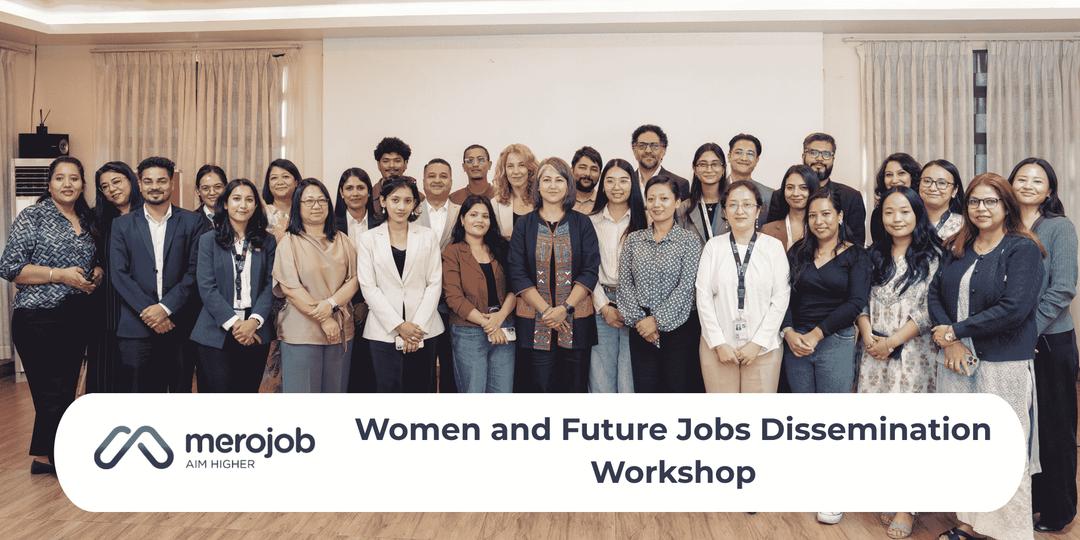
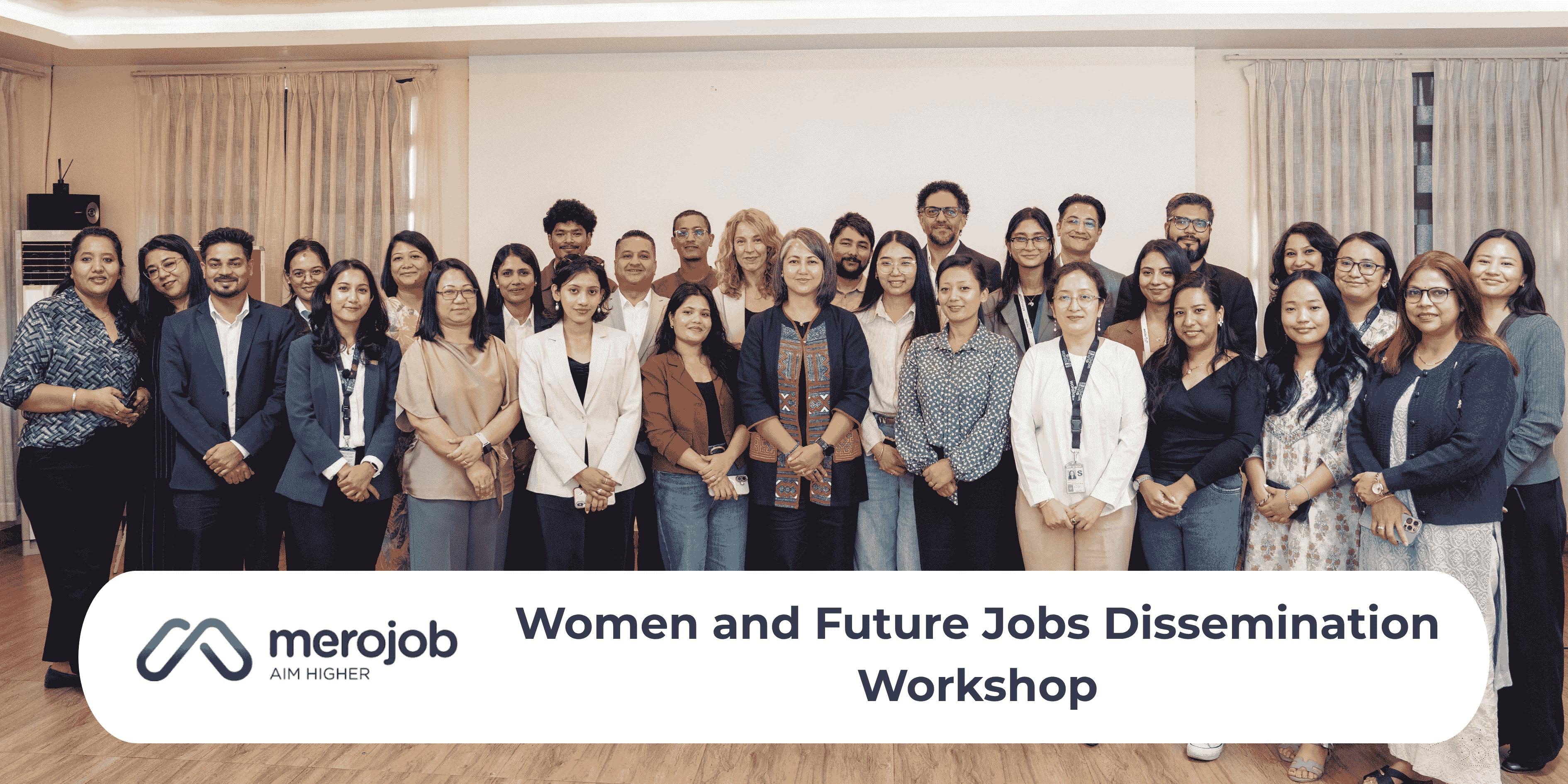
The Women and Future Jobs Dissemination Workshop was a meaningful workshop jointly organized by UN Women Nepal and MeroJob Limited. It convened experts to talk about the impact generative artificial intelligence (AI) is having on the job market and how women can play an equal role in the evolving work world. The workshop addressed the effects of AI on the world of work, changing skills needs, gender disparities in accessing opportunities, and responsible AI use.
The session featured welcome remarks by UN Women Country Representative Ms Patricia Fernandez Pacheco, and Mr Emad Karim, UN Women Expert, gave a technical presentation, and the roundtable discussions were moderated by Mr Shailendra Raj Giri of MeroJob Limited. Participants explored, through research and from a practice-based perspective, how employers, policymakers and other stakeholders can contribute to the promotion of inclusive employment in an AI-driven economy.
The discussions focused on what employers and other stakeholders can do to get ready for the changing job market, and ensure that women have equal opportunities for learning, employment and career advancement.
Understanding How AI Is Changing the Future of Work.
The workshop kicked off with the technical presentation titled “Women and Future Jobs: Research by UN Women and LinkedIn,” which discussed the changes in job requirements, at-work responsibilities, and skills to be relevant in the changing employment landscape.
The theme of the presentation was that jobs can change even if the workers stay in the same job. With the increasing adoption of AI in the workplace, the methods of working could change, and employees might need to acquire new skills and adjust to new expectations.
It also highlighted that the use of AI doesn't always lead to job loss. Although AI can alter the way some tasks are done, it can also bring opportunities to boost productivity and revolutionize the way workers perform their tasks. However, it affects different occupations in varying ways, and it is crucial to understand how these are affected by it. The presentation highlighted the need for continuous learning and adaptation as organizations and employees respond to these changes.
The Gender Gap in Labour Force Participation in Nepal
A major focus of the workshop was the difference between women's educational participation and their representation in the labour force in Nepal.
The Nepal Living Standards Survey 2022–23 showed that 24.4% of women and 52.7% of men participated in the labour force at age 15 and above. While Nepal has nearly reached gender equality in enrolment in secondary education, the gains have yet to be reflected in participation in paid work.
The discussion pointed out that 'education' is not enough to guarantee equal employment opportunities. Women also require opportunities to access the relevant skills, appropriate employment and positive working conditions to access, stay in and advance in the workplace.
In the evolving nature of work, these barriers become all the more significant. Attention must be given to the conditions that influence women's participation in the labor force, along with education and training, to ensure that women have access to increasing job opportunities.
Nepal's AI Paradox: Exposure Versus Readiness
Another key discussion was on Nepal's role in the evolving AI economy. The presentation highlighted that, on average, AI exposure in Nepal is low compared to other countries in South Asia.
But the lower exposure doesn't necessarily translate to more readiness for workers and organizations to reap the benefits of AI. Some people and companies may be unable to reap its benefits due to a lack of digital skills, connectivity, and technology adoption.
The conversation focused on how to go beyond mere exposure and assess the receptivity of the workforce, organisations, and various sectors to effectively integrate AI. It also underscored the importance of focused studies in Nepal to gain insights into the industry and geographical and social variability of the usage of AI. This understanding can aid in identifying both the winners and the losers of the technological revolution and the barriers to access to this new economy powered by artificial intelligence.
Gender Gaps in AI Literacy, Access, and Representation
Additionally, the workshop touched on potential gender-specific barriers for women related to access to AI tools, learning the necessary skills, and adapting to emerging career paths.
There are potential barriers for women to access AI in the workplace, climb into new roles, and gain access to opportunities in technology-related jobs. Lack of female participation in science, technology, engineering, and mathematics (STEM) and the development of artificial intelligence (AI) can also result in biased systems and inequitable outcomes.
The difficulties faced emphasize the need to make education and training on AI more accessible for women, and require that technological development take into account various experiences and needs.
Several areas were highlighted for attention, such as inclusive AI policies, gender-responsive reskilling, enhancing digital access, and increasing the representation of women in technology and decision-making.
By addressing these areas, contexts in which women are in a better position to meet new skills demands and take advantage of new forms of labor supply opportunities are established.
Changing Hiring Practices and Skill Requirements in the Age of AI
The roundtable discussions offered hands-on insights into the impact of AI and digitalization on recruitment and expectations at work.
Group A reflected on the ever-changing nature of skills and the increasing importance of AI knowledge within one's current skills portfolio. The participants learned about the potential of AI in recruitment processes, such as CV screening and candidate evaluation, and about data protection, CV verification, and responsible use.
There was also a point made about how valuable aspects of human creativity and critical thinking, idea generation, and judgment will become more critical as AI takes over routine tasks.
The participants emphasized the need to build AI-related capabilities in early development and readiness to meet the changing needs of the job market. Meanwhile, they emphasized that there will always be a need for human involvement in recruitment. For instance, when it comes to in-person interviews, they can assist employers go beyond the data on a CV. The conversation highlighted the importance of combining technology with human assessment to ensure that the best fit is provided when hiring candidates.
Addressing Gender Differences in Reskilling and Career Pathways
Group B explored the differences women and men may experience when accessing reskilling opportunities and transitioning into new career pathways during table discussion.
Participants highlighted the fact that AI is a general-purpose technology, so the impact of AI should be understood beyond the employment landscape, and that policies and supports should take into account social and economic impacts.
The group emphasized the importance of conducting more research on AI's adoption in Nepal, particularly among women, men, and various social groups, both urban and rural. This kind of work can be used to assist in the identification of access, participation, and benefit disparities.
Another key factor was to acknowledge and fairly pay for women's communication and collaboration skills. As work evolves and technology continues to transform the skill sets needed for various jobs, these capabilities are also pertinent.
Participants also raised concerns about safe environments (both physical and digital). Women may face difficulties in taking up a job or changing jobs due to their commute and worry about their safety. It is therefore imperative to take steps to overcome these obstacles to achieving more equitable access to employment.
Promoting Inclusive and Responsible AI in Recruitment
The responsible use of AI in hiring was another key topic explored during the roundtable discussions.
Group C highlighted that gender should not be a determining factor in recruitment decisions, but rather people's skills and their suitability for the role. Participants spoke about a recruitment model where the scope of work is set by humans, and the job description is validated by humans, while AI can assist in CV analysis and candidate matching.
With this method, candidates continue to be reviewed by humans and final decisions are made by them. The group also shed light on the dangers of solely using AI in recruitment. Also, automated systems can miss finding a good candidate, especially if they focus on ensuring a polished CV and don't consider individual skills and circumstances.
This conversation highlighted the necessity of valuable human oversight in AI-powered hiring. While AI tools can be helpful in administrative and analytical work, they should not supplant the thoughtful process that is necessary to identify appropriate candidates in a non-discriminatory manner.
Employers must also take into account fairness, data security, and the risk of algorithmic bias when looking at responsible AI adoption, as well as efficiency.
Creating Opportunities for Women in the AI Economy
Group D focused on practical measures that could help increase women's participation in an AI-enabled economy.
The participants emphasized that it was essential to offer women AI training for them to acquire relevant skills and be able to take advantage of the new job opportunities. They also talked about the potential of AI to help achieve flexibility and work-life balance, depending on its application.
But the advantages of technological change do not ensue without struggle. Women must have access to learning opportunities, policies that support them, and social protection measures if they are to become more deeply involved in the changing nature of work.
The group also highlighted the importance of self-paced learning, with easy-to-access content that can be adapted to suit the needs of individual learners. Finally, participants shared insights on the need to minimize algorithmic bias and the need for policy frameworks that enable equitable and inclusive participation.
These measures were shared as key factors in supporting women's access to new career opportunities and to the opportunities offered by AI.
Conclusion
The Women and Future Jobs Dissemination Workshop provided a platform to discuss how AI is changing the job market and what these changes mean for women in Nepal. The presentation and roundtable discussions highlighted the need for continuous learning, fair recruitment practices, responsible AI use, and equal access to digital skills and employment opportunities.
The discussions also emphasized that AI should support human capabilities rather than replace human judgment, especially in recruitment and other important employment decisions. Employers, policymakers, and training providers all have a role to play in addressing barriers that prevent women from accessing new career opportunities.
As AI continues to change the way people work, creating an inclusive future requires more than adopting new technology. It requires ensuring that women have the skills, resources, and support to participate in the changing job market and benefit from the opportunities it brings.


.jpg)
_vIkZvnV.jpg)
.jpg)
.jpg)
.jpg)