Your Career Is Not a Ladder. It’s a Portfolio
When someone asks about your career, what's the first thing that comes to mind? For many people, it's their job title. We often think of careers as ladders. You start at the bottom, work hard, get promoted, and keep moving up. You started with an entry-level job, gained experience, moved into a senior role, became a manager, and kept climbing. One step after another.
But real careers don't always move in a straight line. You might switch industries. You might take on a different role. You might learn a new skill, lead a project, mentor a colleague, or solve a problem you've never faced before. None of these experiences may come with a new title. Yet they all make you more valuable.
Your career is more than the job titles you have held. It is the combination of skills you have developed, experiences you have gained, problems you have solved, results you have delivered, and lessons you have learned along the way.
That is why it can be more useful to think of your career as a portfolio, not a ladder.
What a Career Portfolio Means
A career portfolio is not just a collection of certificates or documents presented to the employer. It's the professional reputation that you accumulate over time. It includes:
- Skills you've developed
- Experience you've gained
- Projects you've worked on
- Challenges you've solved
- Results you've achieved
- Knowledge you've acquired
- Professional relationships you've built
- Training and learning you've completed
Example: Consider two professionals who have the same profession. Both could possibly be Marketing Managers. One has experience in content creation. The second one has a background in content, search engine optimization, analytics, campaign administration, employer branding, team management, and customer research. The title is the same. The portfolio is not a recipe for success.
When hiring, employers don't just look for a title; they're looking for the skills and the experience. The job title is just a small part of the picture. The true value of your career is the knowledge and actions that you have imparted.
A positive change in position (promotion) is a significant step in a career, but not the only one. At times, growth is about accepting a more substantial project. It can be learning to use another tool or working with another team, managing people for the first time or making better decisions.
You can even remain in the same role for several years and develop into a totally different kind of job. For instance, a financial reporting CPA could be promoted to budgeting, forecasting, data analysis, and business planning. While they can't change their designation at all times, they can change their abilities over time.
They gain from each experience, building on what they can take to their next opportunity. This is where career advancement goes beyond the mere promotion path. It becomes about building what you can do next.
Not Every Career Move Has to Be Upward
When considering a career move, one question most often crops into the mind is: "Is this a better job? However, frequently it should be asked: “What will this opportunity do for my career?”
Your new career could lead you to a new way of working. A project out of your routine can be useful for learning a new skill that can turn out to be useful later. These are moves that can be particularly significant for mid-career and experienced professionals. The next stage is not necessarily one in which titles are accrued. It can be about creating an amalgamation of skills that opens up more opportunities.
For example, a finance professional transitioning into business operations won't necessarily be promoted to a higher position right away, but they now understand the business decisions and the impact of these decisions on day-to-day operations. This experience is added to their career portfolio.
What Makes Your Career Portfolio Valuable
Having the longest list of skills isn't a strong career portfolio. It's a matter of a mixture of skills, experience, and results. You might be an expert and be able to do the work. You might be able to deal with individuals through communication skills. You might be able to assume responsibility as a leader. Your expertise in your field can make better decisions.
These experiences combined make something that can't be conveyed in a job title. That's also why it is important to maintain your professional profile. The more experience you gain, the more your Merojob profile will be based than just your current designation. Your skills, work experience, training, achievements and areas of expertise all contribute to the bigger picture of your career.
It's not necessary to have a clear vision of where your career will go in 5 or 10 years. However, it is useful to have an idea of what to build next.
Ask yourself:
Which of my skills do I need to improve?
What area of work would I like to have more experience in?
Which issues do I wish to develop my skills in solving?
What is my professional purpose?
Which gaps does my career portfolio have?
Your answers can assist you in making better decisions about your next role, project, training, career opportunity, and direction in your career.
Don't pick the next move just because it seems like the next step on the path to the top, but consider how it contributes to the overall goal. So sometimes the thing that is going to move your career forward will not be the thing that is going to propel your career up. It's the one that makes you better.
Turn Your Experience Into Your Next Opportunity
A career portfolio is only useful if you know how to use it. The experiences you've gained over the years, the projects you've led, the skills you've acquired, the challenges you've solved, and the outcomes you've achieved. These don't need to be limited to your mind or in an old CV.
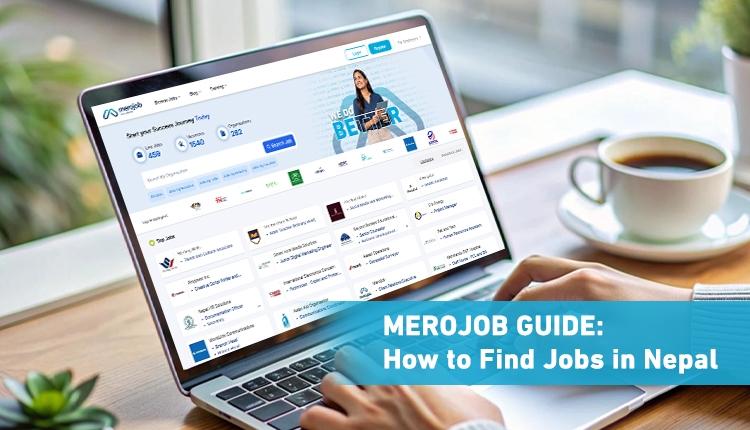
When you're looking at your next opportunity, they should be there. This is where your professional profile will come in handy. Your Merojob profile can be more than just a list of your places of employment. Ensure it is up to date with your most current experience, skills, training, achievements, and areas of expertise. If your work changes, your profile changes, too.
Add a new function if you've recently started a new role. If you've developed a new skill, show it. Include if you've taken on a greater responsibility or acquired appropriate training. The key to a job seeker's profile is to show the job seeker's current or status quo career, not two years ago.
Your Next Opportunity Can Add to Your Portfolio
The next job you choose does not have to be just another position. It might be a chance to acquire something that you don't currently have! Perhaps you are thinking of taking on a leadership role. Seek out opportunities where you can have influence over people or projects. Perhaps you would like to build up your technical expertise. Seek employment opportunities in which those skills are part of the job. Perhaps you're in the market for a new industry to experience. Consider career opportunities that will provide you that experience.
Merojob provides job seekers with opportunities in various industries, experience, and function areas. You don't need to worry about finding the next title, but consider what opportunities fit into the professional you want to be. The idea is not to switch careers often. The aim is to take considered steps to enhance your career journey.
Keep Building Your Career Portfolio
Your career portfolio isn't something you create, set aside and leave behind! It changes as you gain experience, learn new skills, and take on new challenges. Career development doesn't end once you have a job.
Track where you have succeeded and feel good. Write down the projects you have been involved in, problems solved, and outcomes that have been created. Be aware of the skills that employers are seeking in your area of employment and where you have room to develop.
The most important thing is, don't update your professional profile just when you're in the process of searching for a new job. You should update your Merojob profile as you advance your career. When work roles change, update your work experience. Include pertinent skills and training as they are acquired. Write achievements to demonstrate the effects of your work. A thorough and up-to-date profile provides employers with a better understanding of the professional behind the title.
Your Career Does Not Have to Look Perfect
If you have had a career of a few changes, unexpected opportunities or setbacks, don't get caught up in the idea that you are going backwards. Your first job may have taught you to work. You might have learned leadership skills in another position. You might have learned how to solve problems in a tough project. You might have found a new outlook, when you changed jobs. One new skill could have given you a whole new opportunity.
The experiences are valuable when you know what they have contributed to your career. Rather than asking "How far up have I gone?,", ask:
What has been my creation?
What now can I do that I couldn't do before?
What should I put in the next box?
You don't have to climb the ladder for a career. It may be a portfolio that expands with all your skills, experience, achievements, and opportunities that you pass on.
Frequently Asked Questions
What is a career portfolio?
A career portfolio is the combination of skills, experience, achievements, projects, knowledge, and learning you build throughout your professional journey. It shows the value you have developed beyond your job titles.
Is a career portfolio only for creative professionals?
No. A career portfolio can be useful for professionals across finance, HR, IT, marketing, operations, engineering, management, and other fields. It focuses on the skills, experience, and results you bring to your work.
How do I build a career portfolio?
Build relevant skills, take on meaningful responsibilities, work on projects that expand your experience, track your achievements, continue learning, and keep your professional profile updated as your career develops.
Can changing careers add value to my portfolio?
Yes. A career change can add new industry knowledge, transferable skills, perspectives, and experience. The value of the move depends on what you learn and how those capabilities connect with your longer-term career direction.
How can I use my career portfolio when looking for a job?
Use your CV and professional profiles to show more than your job titles. Highlight relevant skills, responsibilities, achievements, projects, training, and results that demonstrate what you can contribute to your next role.
Final Thought
Your career is not a ladder where every move has to be upward. It is a portfolio that grows with every skill you build, problem you solve, responsibility you take, and opportunity you turn into experience. Some chapters may bring a promotion. Others may bring a new skill, a different industry, a bigger responsibility, or a completely new direction. Each experience can add something valuable to the professional you are becoming.
Keep learning. Keep building relevant skills. Keep track of the work and achievements that show what you can do. Most importantly, keep your professional profile updated so it reflects the career you have built, not just the job you currently hold.
As you think about your next chapter, explore opportunities that can add to your experience and move you closer to where you want to go. Merojob can be part of that journey, helping you discover opportunities across different roles, industries, and career levels. Your next move does not have to take you higher. It should help you move forward.