Skill-Based Hiring: A Smarter Way for Employers to Find the Right Talent
One of the main problems any company faces is hiring the right candidate. The traditional way of hiring has relied on degrees, academic qualifications, and experience to shortlist candidates. Even though these factors still matter, they do not always guarantee that a candidate has the skills needed to perform the respective role well.
That is why more employers are adopting a skill-based hiring process, which looks at the skills in candidates more than their academic qualifications.
Skill-Based Hiring: What is it?
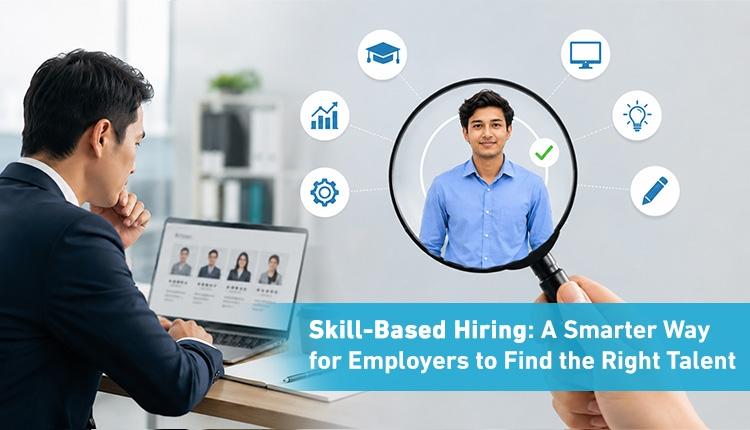
Skill-based hiring is a process of hiring individuals who have the necessary skills and abilities, and not just the educational qualifications and past job titles. The concept of skill-based hiring is to hire individuals who are capable of doing what is required for the role.
For instance, if an employer is looking for a graphic designer, they want to know whether the candidate will be able to produce good graphics and design content, rather than what degree they hold.
Benefits of Skill-based Hiring
Access to Large Talent Pool
If a company is only interested in the degree or certain educational qualifications, they might fail to see the skills in some of their candidates. Skill-based hiring also enables companies to look past factors like age, experience, or education and hire those who possess the necessary skills and abilities.
Better Hiring Decisions
Hiring based on skills helps employers identify candidates who can perform the job effectively. This increases the chances of finding the right fit.
Reduced Skill Gaps
Skill-based hiring helps employers find candidates who meet current business needs, reducing gaps in critical areas and improving overall productivity.
Greater Workplace Diversity
By looking beyond traditional qualifications, employers can attract talent from a wider range of backgrounds, experiences, and career paths.
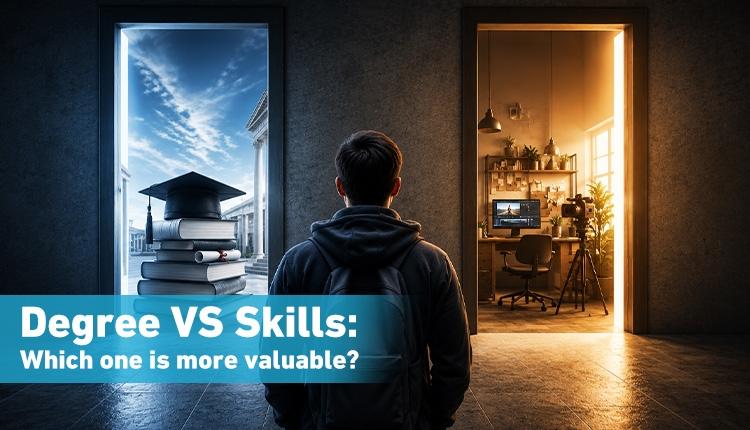
Finding the Right Balance Between Skills and Degree
Even though skill-based hiring is becoming more common, academic degrees still play an important role in the recruitment process. Degrees can help employers understand the academic knowledge, commitment, and understanding of a particular field.
For some professions such as medicine, engineering, law, and accounting, a degree is mandatory. However, employers should also consider if candidates have practical skills needed to perform the role successfully.
The most effective hiring decisions are made by evaluating both qualifications and skills. A degree can indicate what the candidate has studied, but skills indicate how they are able to apply that knowledge to the workplace.
The Evolution of Hiring Practices
The way people hire has changed over the years. Hiring procedures have evolved over the years. Employers no longer focus on skills or degree only. They focus on candidates who can balance both qualification and skills that helps to boost business success.
Skill-based hiring doesn't exclude degrees or experience. It's about treating candidates equally for what they can bring to the table for the organization. Employers that take the approach of hiring in this way are more likely to create teams of capable people, to reduce errors in hiring, and to remain competitive in a dynamic job market.
Conclusion
The hiring process is shifting, and companies are seeking candidates who have more than just degrees and job titles to acquire the right people. Skill-based hiring allows companies to identify the right individuals for a job who possess the necessary skills.
Qualifications are still relevant, but pairing them with a strong emphasis on skills can result in improved hiring outcomes. Through Merojob, employers can connect with a wider pool of talent and find candidates who have both the knowledge and the practical abilities needed to succeed.
Blog that may help you to hire smarter: