Since its inception in 2009, Merojob has been at the forefront of connecting job seekers and employers in Nepal. The goal is to provide a comprehensive platform for job seekers to find jobs in Nepal and for employers to find the right fit for their organization. We pride ourselves on being a reliable bridge between hiring employers and job seekers and have established ourselves as a national leader in recruitment solutions.Read more...
AI and Robotics in HR: Opportunity or Threat to Human Resource Professionals?
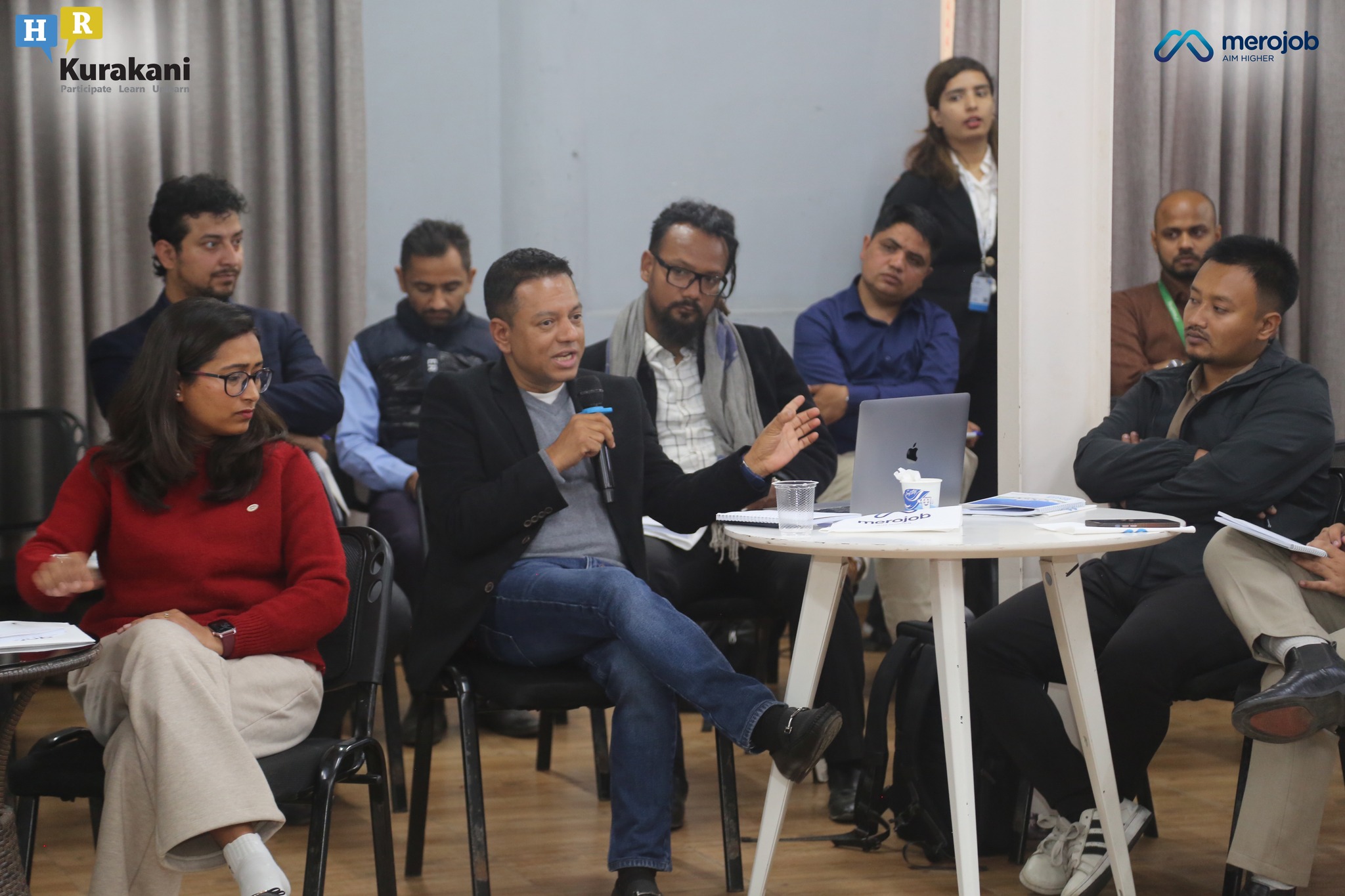
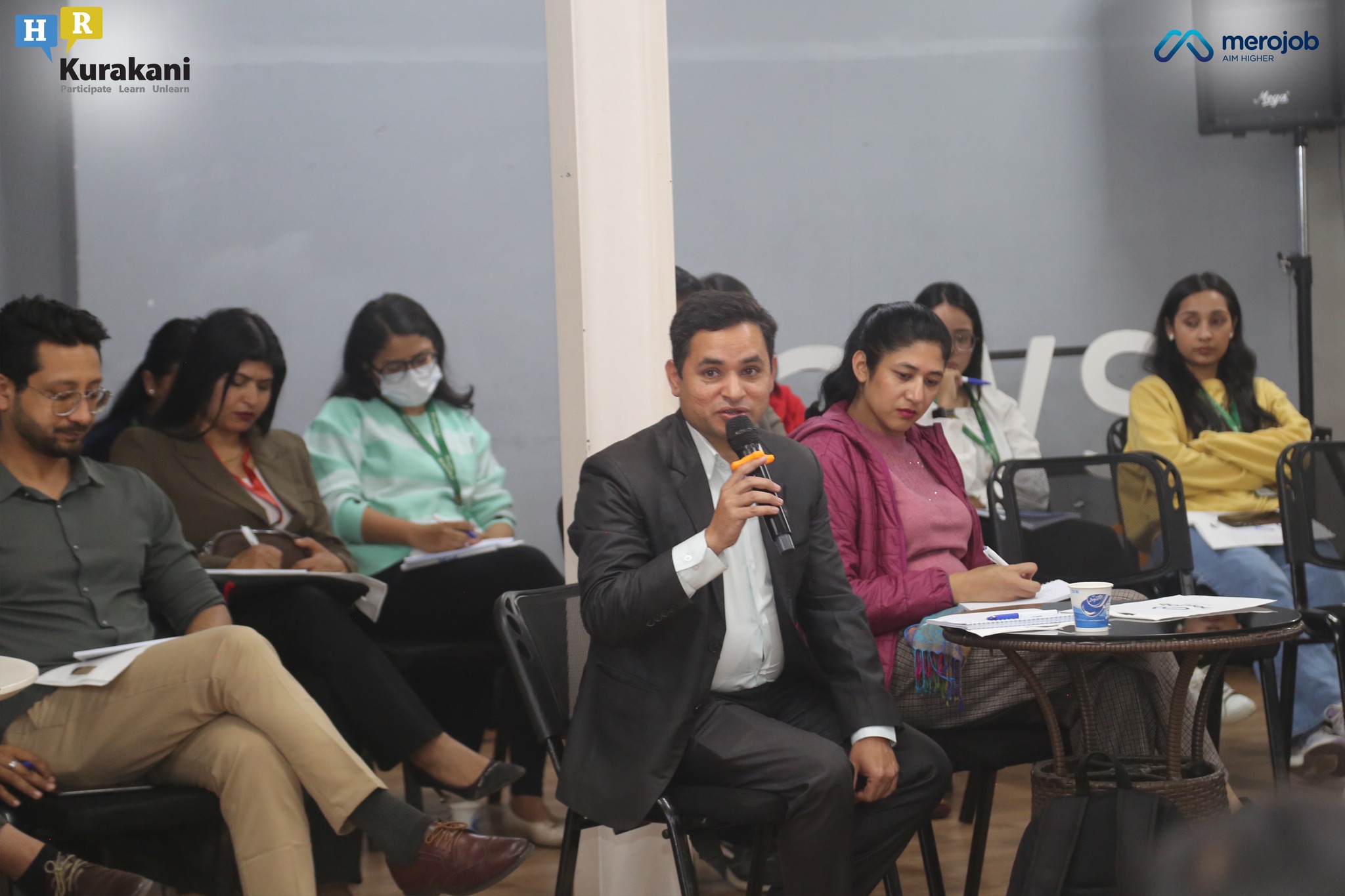
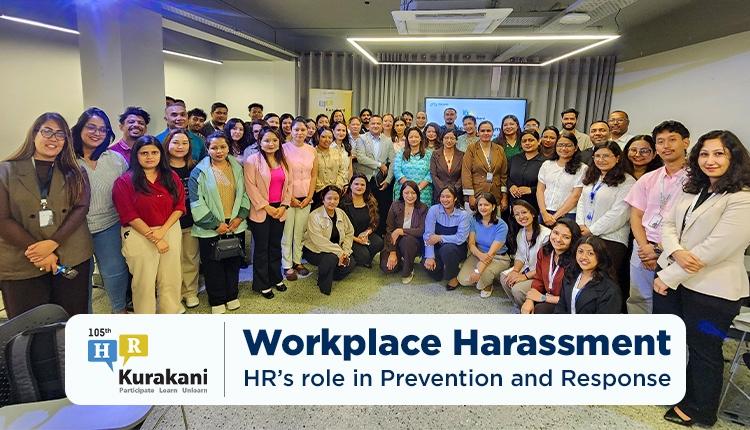
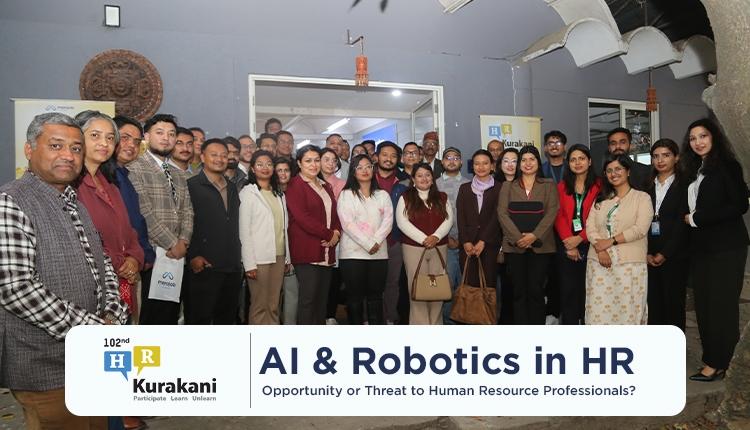
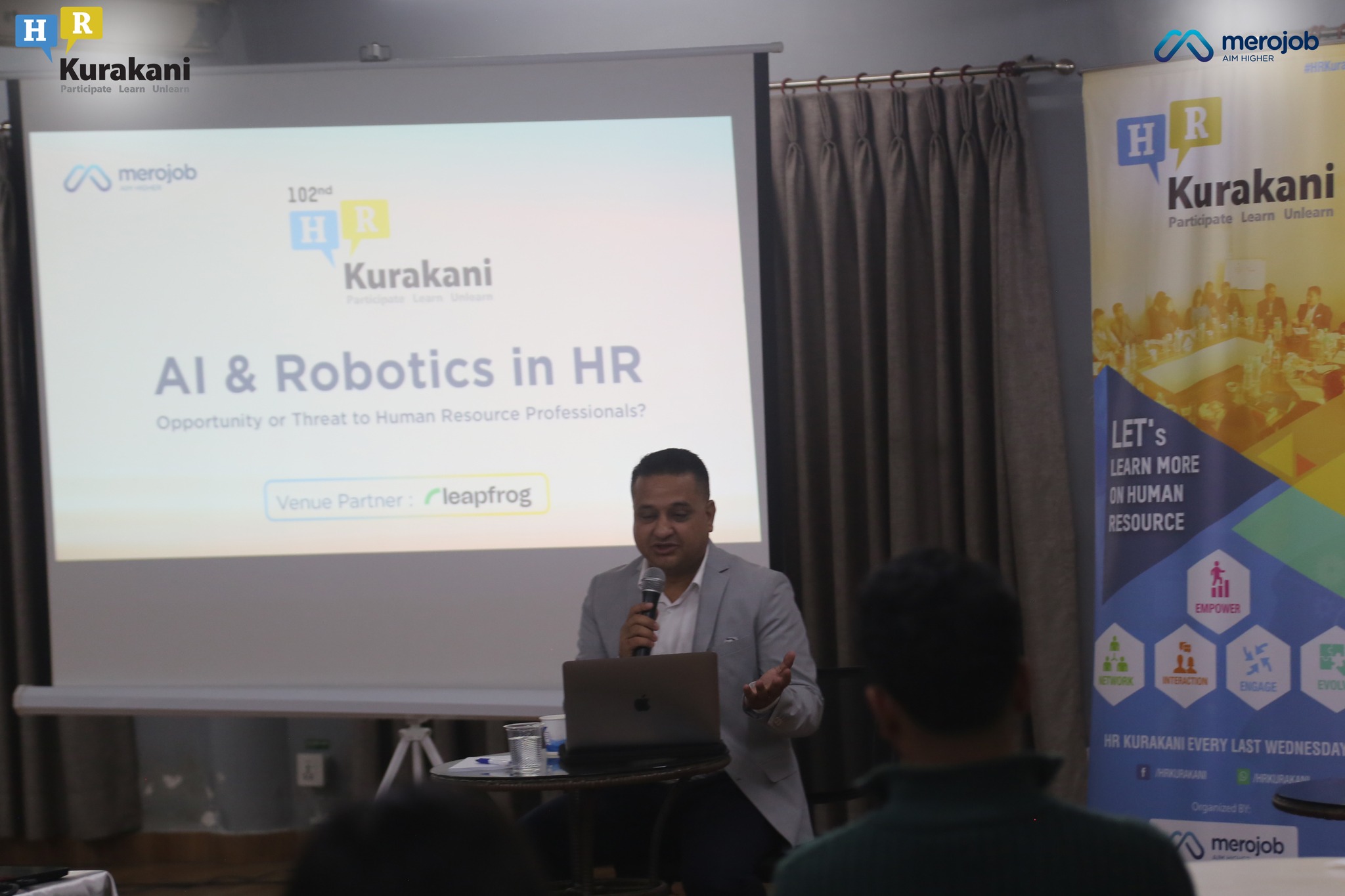
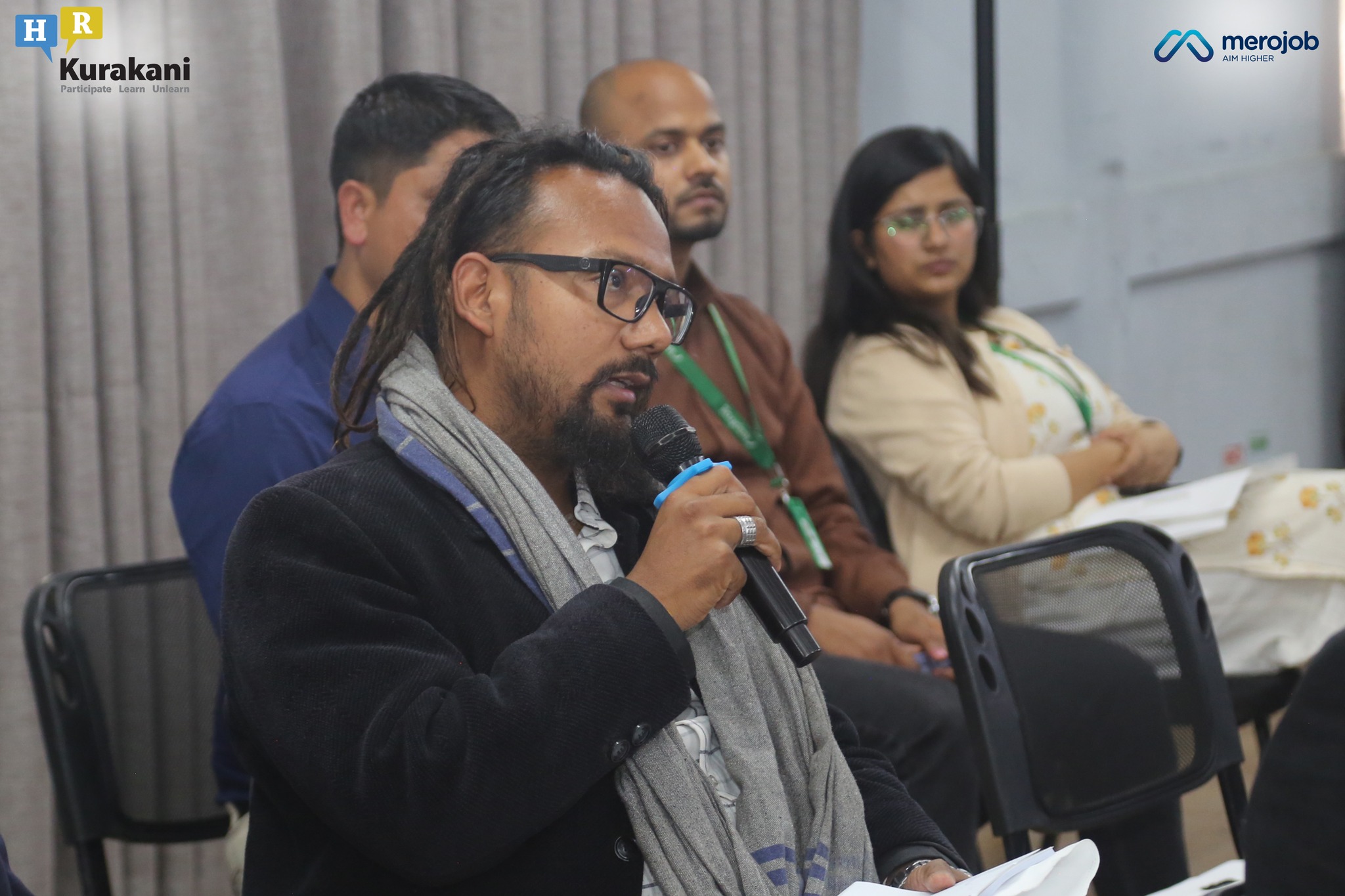
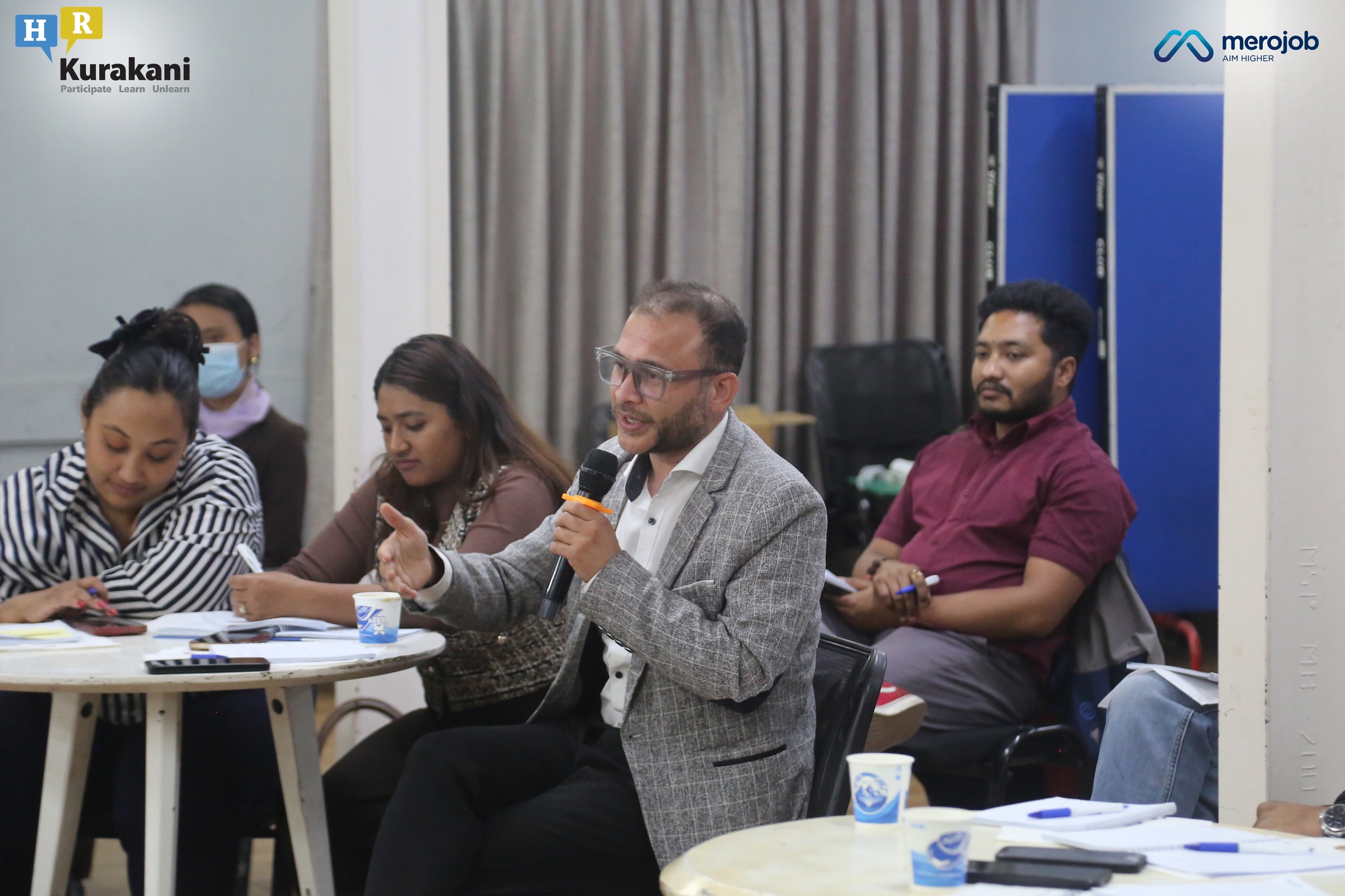
The 102nd edition of HR Kurakani was not just a conversation; it was a significant chance to consider the way technology is changing the profession of human resource management. On March 11, 2026, at Leapfrog Technology, HR professionals, Business leaders, recruiters, and educators joined in an open and in-person discussion on AI and Robotics in HR and the opportunities and challenges they present for organisations and HR professionals.
This session was moderated by Mr Shailendra Raj Giri, Founder and MD of Mero Job Limited, who spoke about the evolving role of AI and Robotics in Human Resource management and whether the technologies posed a threat or an opportunity to human resource professionals. The modern workplace is changing at an extremely high pace due to Artificial Intelligence (AI) and Robotics. Intelligent technologies are finding their way into organisational processes with the integration of the recruitment system, data analysis tools, and so on. The HRs and the business leaders not only expressed their views but also gave their personal and real-life experiences.
The discussion introduced the current impact of AI on the recruitment process, employee management, and decision-making processes. Although AI has numerous positive effects related to efficiency and productivity, it has been associated with the problem of data privacy, bias, ethics, and the changing role of HR professionals.
The Anatomy of AI and Automation.
The point of stating that AI and automation are not interchangeable started the discussion. Dr Suresh Pokheral, Executive Member of AI Association Nepal, clarified that the primary focus of automation is on lowering manual labour and increasing efficiency in operations. Automation and AI are not synonymous. AI assists in automating data by making the machines smart enough to interpret and process data.
Automation enables organisations to save on manual labour, enhance efficiency and get real-time data more easily. Robotic Process Automation (RPA) is one of the applications used by many banks in facilitating activities like card processing and other monotonous tasks.
Nonetheless, automation is not a part of intelligence. Artificial Intelligence will allow machines to read, learn based on trends, and anticipate results.
Four major functions AI systems do, according to Mr Shailendra Raj Giri:
Reads informations.
Intelligence and Data Predict Results.
Discussion via communication channels.
Learns and improves over time.
Shailendra Sir pointed out the significance of data in AI systems.
“Data should be fed to AI. No information translates to no intelligence.’’
What Is a Robot?
In the session, Mr Bikash Gurung, the President of the Robotics Association of Nepal, clarified that most people have a poor understanding of robots.
Most individuals who represent the majority view robots as human-like machines. The idea of robotics is far more extensive; however, the term robot has a meaning of physical labour. A robot refers to a machine that is programmed to work and do so effectively and with continual motion. Robots are able to handle repetitive work over the long-term without exhaustion; this makes them useful in the industrial fields that need twenty-four-hour work.
“Robots are efficient to run through the day and night as opposed to humans.’’
Analysts made the connection between AI and robotics straightforward:
AI = Brain
Robot = Body
“AI is an intelligence and decision maker, whereas the robots are the ones working physically.”
Can AI Replace Human Workers?
The chance of human workers being substituted by AI and robots was one of the most important questions that were to be discussed during the session. Mr Shailendra Raj Giri stated that AI is not aimed at making people unemployed, rather it is intended to increase efficiency and productivity.
“The Robots and AI will co-exist with humans. They will be applied in efficiency and comfort, and not to avoid human roles.”
Although machines are capable of executing technical and repetitive duties, they are unable to emulate some of the human abilities. Such human capabilities as ethics, empathy, emotional intelligence, and relationship building will continue to be relevant in most professions, particularly human resource management.
Artificial Intelligence in Recruitment and HR Functions.
Some of the HR functions that are already being deployed using AI are the recruitment processes. According to the HR professionals, AI tools are used now to:
Screen resumes
Rank job applicants
Carry out online tests.
Analyse recruitment data
These services assist human resource departments in saving on manual labour and accelerate the process of recruitment. In the case presented by Ms Sheetal Bhatt, a Talent Manager at Sterling Wells, her organisation has experience with AI tools.
“After the posting of CVs, the system had ranked job applicants according to the criteria provided to the AI.”
But she had another difficulty, too.
“The artificial intelligence-written CVs were also ranked better, even when the relevant skills of the candidate were not so strong.”
Likewise, an example of misleading AI-based assessment results was given by Mr Hari Shrestha, an HR Coordinator of Welthungerhilfe.
“We did a virtual shortlisting and narrowed it down to five successful candidates. Nevertheless, their communication skills in English were lacking when the interview was being conducted.”
To mitigate this problem, the organisation came up with the use of panel interviews to determine whether the performance of the candidates during assessments was a true reflection of their abilities or not.
AI Bias and Data Concerns
The other essential issue mentioned in the session was AI system bias. Scholars said that AI models are trained on past information. When the data used in training is biased, then the AI system can replicate the bias in the decision-making process unintentionally.
A familiar case study of Amazon was pointed out by Mr Ram Bhattarai, the Executive Member of AI Association Nepal.
“Amazon has also devised an AI-based system to hire employees, but this system has discriminated against male employees since most of the historical data that the system was trained on has been of male employees. The tool was later scrapped by the company because of the gender bias.”
This is an example of why it is necessary to use balanced data to develop AI systems.
Privacy and Ethical Issues
AI systems do depend on the organisations' and staff's data extensively, and the issue of privacy and confidentiality is of significant concern. The Executive Member of AI Association Nepal,Mr Santosh Sigdel, highlighted the dangers of using data.
“AI may be biased, and individuals are also the potential victims of AI if the data is not processed appropriately.”
He also posed some important questions that ought to be addressed by organisations:
Do AI tools meet the legal and privacy standards?
Do organisations provide applicants with an explanation of AI decisions?
What is the maximum time for which employee data is to be kept?
What happens if confidential data is misused?
To deal with these issues, analysts suggested that organisations formulate an explicit policy of AI usage. Such policies should define:
The valid application of AI tools.
Data protection guidelines
Openness of AI-based decisions.
The Evolving Process of HR Professionals.
With the increased addition of AI to the workplace, HR professionals will have to acquire new skills and views. Mr Ram Bhattarai used a very curious comparison to describe how human beings tend to respond to the change in technology.
“Sometimes human beings act like pigeons. Closing their eyes is a response of pigeons when they feel threatened. This is the response that many individuals will have when AI begins to alter their industry.”
Professionals should not turn a blind eye to the emergence of AI, but instead, they should gain a better insight into the functionality of these technologies. HR professionals in particular are important since they have better knowledge of the organisation's culture, employee behaviour, as well as ethical issues than the technical teams.
AI in Education and Learning
The role of Artificial Intelligence in education was also talked about during the session. These days, students are using Artificial Intelligence to do a lot of things. They use Artificial Intelligence to write their reports, come up with ideas and finish their school work. Artificial Intelligence is really changing the way students do things. MR Madan Luitel, a Lecturer of Tribhuvan University, was concerned with the attitude that teachers ought to display towards this transformation.
In response, Mr Bikash Gurung noted that educators needed to change.
“Educators are supposed to transform their teaching methods. The students are also getting smart in technology, and therefore, the teachers are bound to improve. Scholars opined that rather than limiting the use of AI, teachers could use it as an opportunity to teach students to be responsible in the use of AI, but remain able to think analytically and critically.”
Strategic Implementation of AI.
Another critical point that was raised by experts is the need to implement AI in a planned and organised manner. Mr Shailendra Raj Giri stressed the fact that the first thing that organisations ought to do is to determine the issue they want to address. Before using AI, we should be aware of the issue and ask ourselves, do we actually need AI? In some cases, automation is sufficient, and AI is unnecessary.
Dr Suresh Pokheral also said that AI can be useful to non-technical professionals.
“Non-technical employees are also benefiting from AI. HR professionals are also specialists in their fields, and they can comprehend the organisation's issues at a better level than the IT teams.”
The organisations must begin with smaller tasks to use AI and should extend their use over time with experience.
Conclusion
The contemporary workplace is being transformed by Artificial Intelligence and Robotics. These technologies are already taking over the recruitment, workforce management and organisational decision-making. Nonetheless, it was pointed out in the discussion that Artificial Intelligence is not meant to replace humans; it is meant to help humans. The big problem that companies have is figuring out how to use Artificial Intelligence in a way which means taking care of data, keeping things private, and transparency (being open about what they are doing with Artificial Intelligence).
When we use Artificial Intelligence and Robotics in a way that will really help organisations work better, and give Human Resources professionals new chances to do their jobs. Artificial Intelligence and Robotics can make a difference.
And as Mr Shailendra Raj Giri did conclude at the discourse:
“The AI wave is coming. Organisations should not fear it, but they should learn to use it effectively to enhance productivity and efficiency.”


 Most individuals who represent the majority view robots as human-like machines. The idea of robotics is far more extensive; however, the term robot has a meaning of physical labour. A robot refers to a machine that is programmed to work and do so effectively and with continual motion. Robots are able to handle repetitive work over the long-term without exhaustion; this makes them useful in the industrial fields that need twenty-four-hour work.
 A familiar case study of Amazon was pointed out by Mr Ram Bhattarai, the Executive Member of AI Association Nepal.