Since its inception in 2009, Merojob has been at the forefront of connecting job seekers and employers in Nepal. The goal is to provide a comprehensive platform for job seekers to find jobs in Nepal and for employers to find the right fit for their organization. We pride ourselves on being a reliable bridge between hiring employers and job seekers and have established ourselves as a national leader in recruitment solutions.Read more...
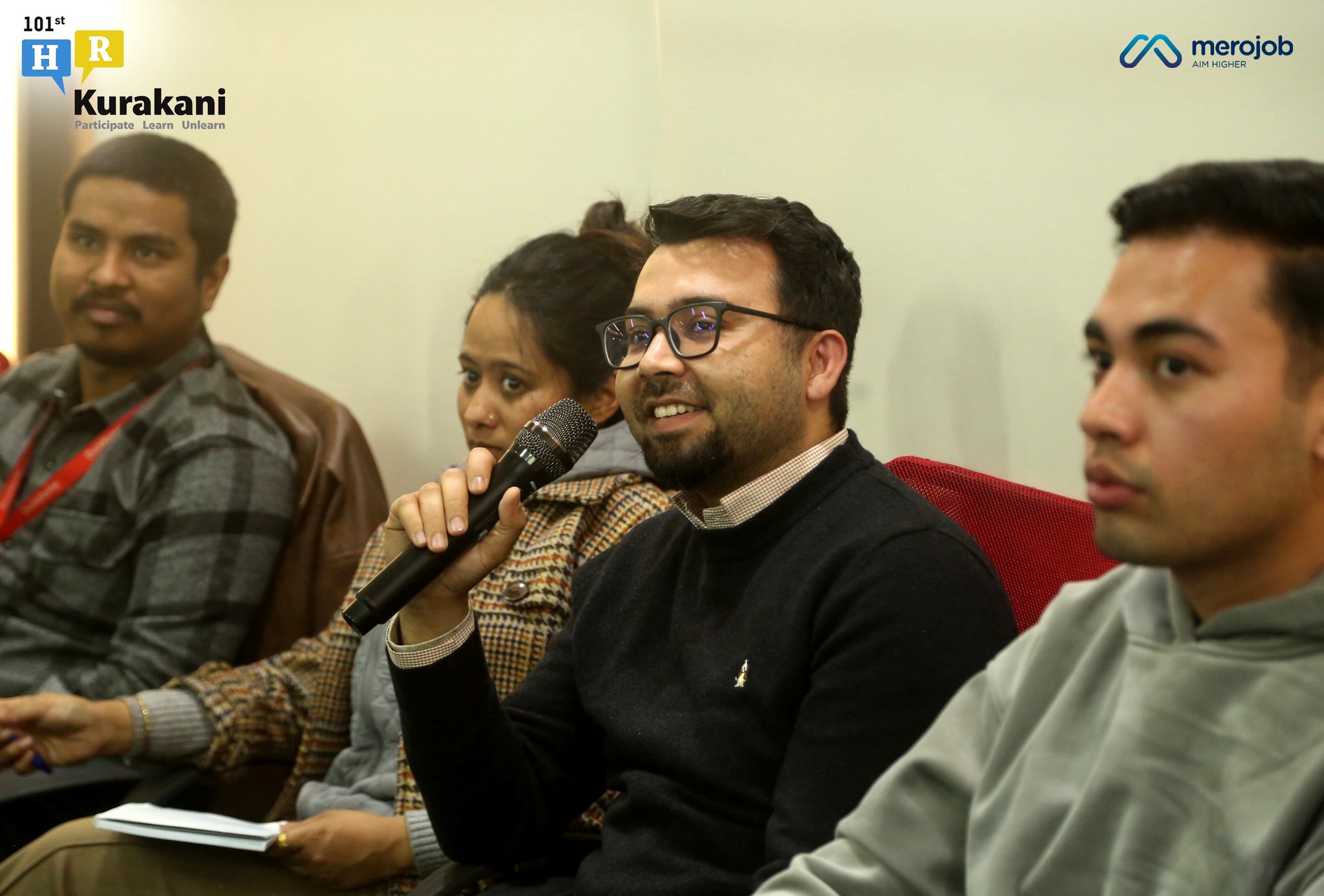
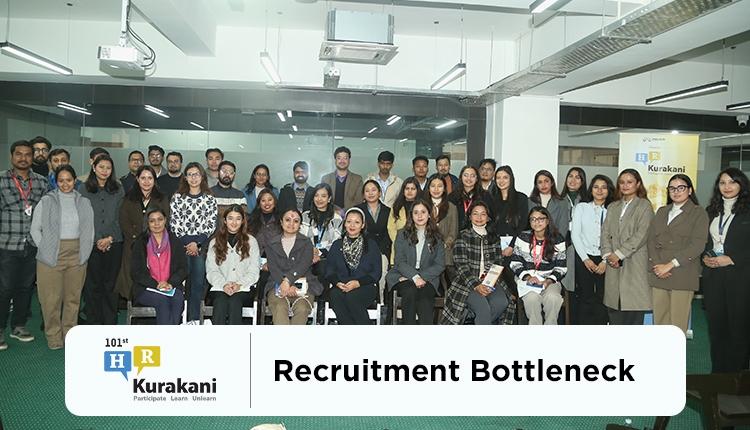
The 101st edition of HR Kurakani was more than just another conference; it was also an important opportunity to reflect on Nepal's ever-changing HR landscape. The event, held on February 11, 2026, at Codavatar, brought together HR professionals, organizational leaders, recruiters, and managers for an open and informal discussion about Recruitment Bottlenecks and the challenges that firms face when placing the right person in the right job.
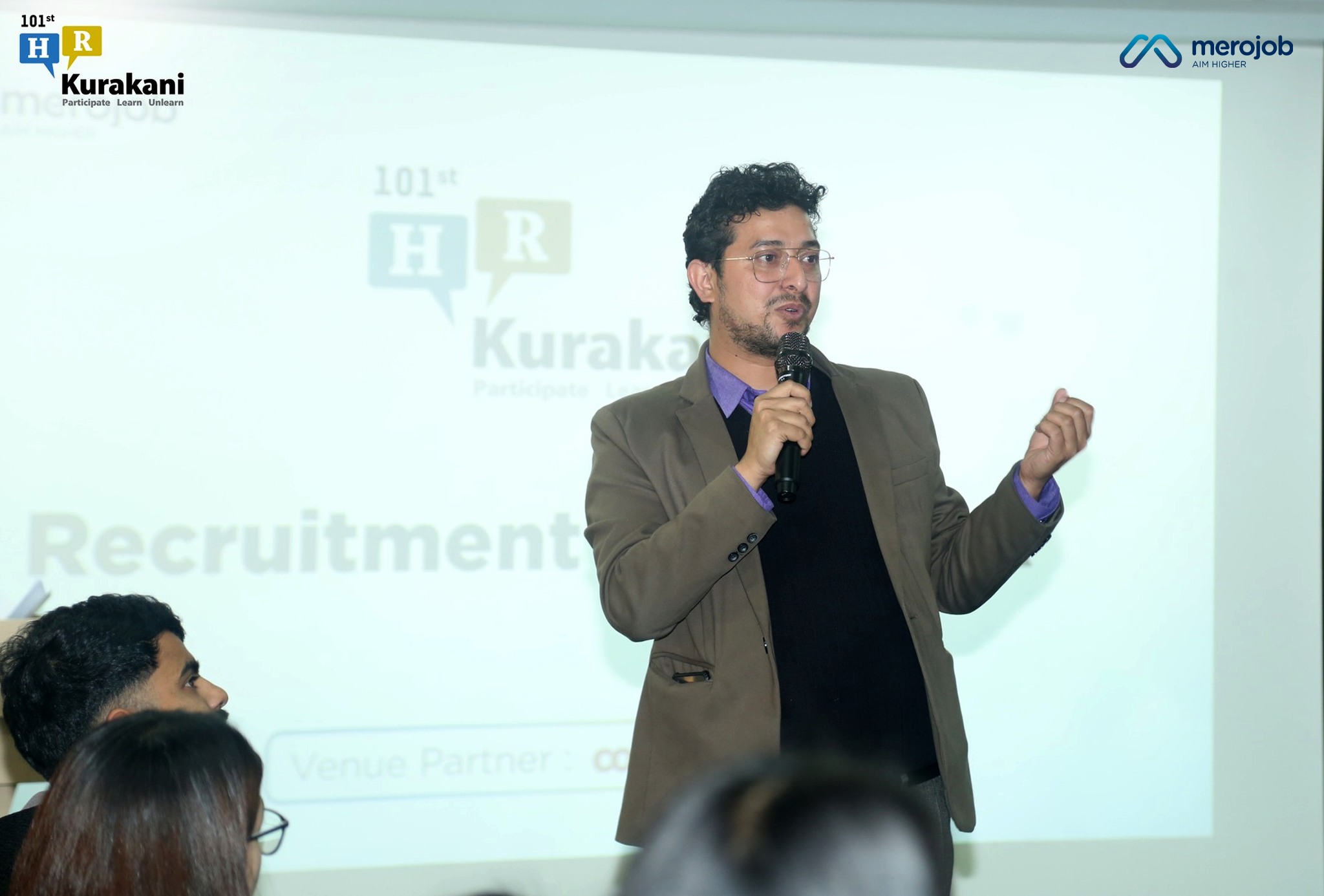
Ravi Bhattarai, Head of Finance and Business Operations of Mero Job Limited, moderated the session and focused the conversation on real-world experiences rather than opinions. HRs and business leaders were able to discuss their personal experiences with the roadblocks that slow down recruiting procedures and investigated the reality of the present employment market.
Modern Recruitment in Nepal: Challenges, Decisions, and Practical Solutions from HR Professionals
Recruitment is frequently viewed as a planned and predictable process. In fact, recruiting begins with uncertainty, frequent revisions, and various decision makers attempting to connect organizational needs with market realities. The majority of obstacles come during the first round of recruiting, particularly when starting a new postion.
Human resource professionals of different industries of Nepal offered practical experiences demonstrating how firms are adjusting their recruiting techniques to create more successful and sustainable hiring procedures.
Recruitment Begins with Alignment, Not Job Vacancy Posting
Management choices, regulatory changes, and developing business requirements all have a significant impact on the early stages of recruiting. Even after job vacancies are advertised, job requirements might be altered, confusing both HR personnel and candidates.
When a business creates a new job position, discussions between hiring managers and HR teams often go back and forth before expectations are established. Many organizations post job vacancies based on known qualifications and modify expectations through interviews.
Recruitment today is less about fixed job descriptions and more about continuous alignment.
Management-HR vision gaps typically hinder recruitment process because managers understand operational demands but may not completely comprehend recruitment dynamics. Building HR Business Partner positions has emerged as a viable approach for bridging business strategy with hiring implementation.
Minimum wage budgets also limit flexibility in recruiting. Having one-on-one conversations between recruiters and hiring managers helps to define position requirements and minimize mismatched applicant selection later in the process.
Timing Matters: Should Companies Wait or Start Interviewing Early?
A recurring debate among recruiters is whether organizations should wait until vacancy deadlines end or begin interviewing immediately after announcing a role.
Nibha Shakya, Executive Director at Career Coach Nepal Pvt. Ltd., emphasizes speed over waiting:
“We should not wait till the deadline to find the best candidates because another company can hire them.”
Waiting until the application deadline may boost the number of applicants, but it also risks losing great individuals to speedier competition. Many HR professionals now propose rolling interviews, in which screening begins as soon as suitable applicants are received.
In competitive markets, delayed action often means missed talent.
Salary Transparency: Advantage or Bottleneck?
Salary transparency remains one of the most contentious issues in Nepalese recruiting.
Some firms choose not to provide pay ranges at first. This strategy occasionally enables businesses to effectively negotiate and control compensation expenditures. Candidates may want lower compensation than corporations are willing to provide, giving employers more financial freedom.
Others, however, think that recruiting is made easier by being transparent.
Suraj Ban, Talent Acquisition Specialist at Alaya, explains:
“There are no proper databases in Nepal about the ideal salaries for jobs. Due to a lack of data, new positions do not have benchmark salaries. Hiring becomes easier when salary is disclosed.”
Without solid compensation norms in Nepal, both companies and applicants struggle to manage expectations. As a result, many businesses now debate compensation ranges during the first screening step to ensure efficiency while retaining flexibility.
Are Candidates Less Serious or Are Expectations Changing?
Many HR professionals feel today's recruitment issues are due to changing workforce behavior rather than a lack of sincerity.
Candidates are increasingly evaluating organizations in the same manner that employers assess applications. Recruiters may find themselves persuading prospects rather than evaluating them.
Nibha Shakya, Executive Director at Career Coach Nepal Pvt. Ltd., notes that HR plays a balancing role:
“Convincing candidates excessively can later affect employee retention. Recruitment should focus on alignment, not persuasion.”
Susmita Dahal, Training Officer at Vigen Nepal, highlights generational shifts:
“Volatile behavior, salary expectations, and impatience are becoming common challenges among the new generation.”
Some young professionals choose freelancing, content production, or digital employment because they believe it will result in faster financial development. Meanwhile, Bini of Codavatar notes that younger people are less likely to endure strict corporate cultures.
The new generation values respect, growth, and future security more than hierarchy.
Organizations that clearly communicate career roadmaps, responsibilities, company mission, and growth opportunities during early screening stages often experience stronger candidate commitment.
Interview attendance and applicant participation remain important issues. Professionals report a high rate of interview no-shows, which are generally caused by schedule difficulties with candidates' present positions.
Simple operational changes can dramatically minimize drop-offs: · Inform applicants clearly about the time and venue.
Send reminders before the interviews.
Respond promptly to applicants.
Ensure polite communication throughout the process.
Candidates take interviews seriously when organizations treat them professionally.
Virtual interviews have improved accessibility considerably, with HR professionals estimating that nearly 90 percent of candidate turnaround time improved after adopting online interviews.
Internal Delays: A Hidden Recruitment Barrier
Recruitment challenges are not always candidate-driven. Organizational delays also play a major role.
Susmita Dahal, Training Officer at Vigen Nepal, points out that delayed decision-making and holding applications too long often result in losing qualified applicants.
Hiring managers can better discover potential candidates than scripted responses by reviewing resumes ahead of time and facilitating informal interactions.
Sometimes the best candidates are not the best performers in traditional interviews.
Interestingly, some organizations report that fresh graduates occasionally outperform experienced professionals due to adaptability and learning potential.
Data-driven Recruitment Is Slowly Growing
Only a limited number of companies systematically track recruitment metrics.
Thomas Dhakal, Deputy Manager at Chaudhary Group, tracks interview and screening ratios monthly alongside recruitment KPIs. Proper documentation enables organizations to identify hiring bottlenecks and improve long-term recruitment strategies.
Data transforms recruitment from guesswork into measurable performance.
Resume Quality and Candidate Preparedness
Poor resume preparation is a common issue, according to HR professionals. Many candidates do not spend even 10 to 15 minutes improving their resumes.
Increased awareness, training, and exposure to resume-building techniques are required to increase applicant preparedness and recruiting efficiency.
Does AI Help in Recruitment?
Artificial intelligence tools are increasingly used in recruitment processes, but opinions remain mixed.
Utsav Bhakta Shrestha, Operations Manager at Crop Pro Tech Nepal, shares concerns that excessive dependence on AI tools like ChatGPT can create communication gaps, KPI misunderstandings, and operational issues in family businesses.
AI can support recruitment, but human judgment remains essential.
Conclusion: HRs as a Strategic Partnership
Modern recruiting in Nepal is undergoing a tremendous shift. HR professionals' observations show that hiring issues are rarely triggered by a single reason. Instead, they result from communication breakdowns, delayed decision-making, ambiguous expectations, changing labor behavior, and insufficient market data.
Successful recruitment today requires collaboration rather than control.
Organizations that connect management and HR from the start, communicate openly with applicants, implement speedier decision-making methods, and utilize data to fine-tune hiring tactics are more likely to hire the appropriate people. Simultaneously, recognizing generational expectations and optimizing candidate experience promotes long-term retention.
Finally, recruiting should not be considered as a short-term effort to fill vacancies. It is a continuous process of building trust between employers and candidates while shaping the future workforce of the organization. Companies that approach recruiting as a strategic collaboration rather than an administrative duty will be more competitive and sustainable in Nepal's changing employment market.


.jpg)