Busy vs Productive: Are We Measuring Work the Right Way?
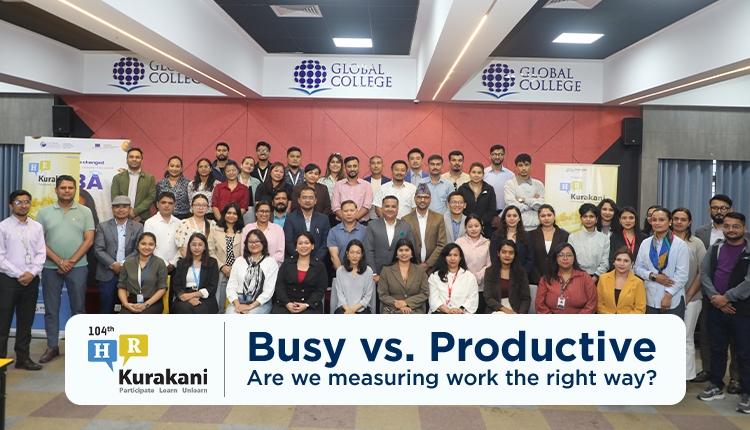
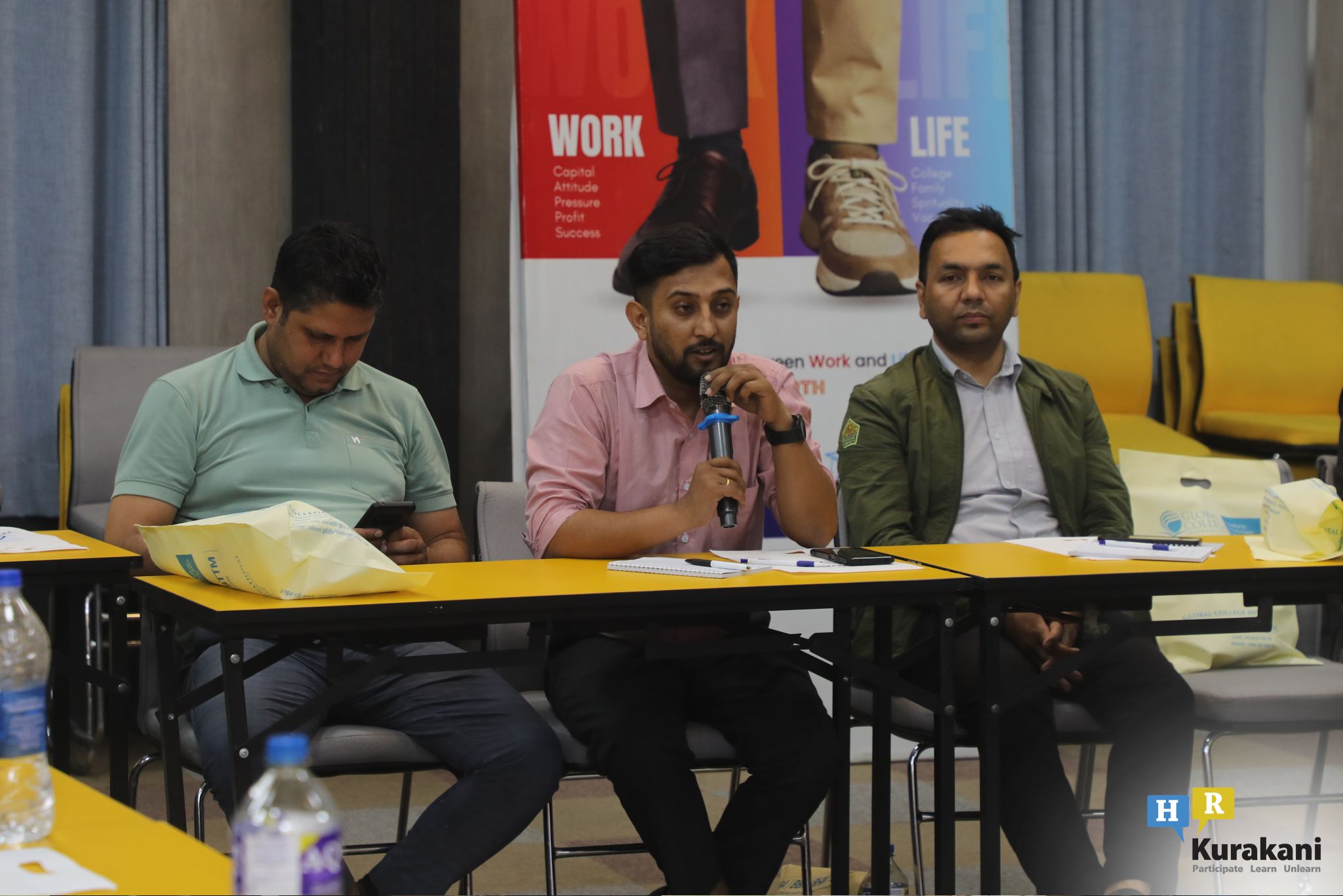
The latest 104th edition of HR Kurakani brought together HR professionals, business leaders, educators, and managers for an engaging discussion on a workplace challenge that many organizations face today: Are employees truly productive, or are they simply busy? which was held on May 13th, 2026, at Global College International.
It was moderated by Mr. Shailendra Raj Giri, Founder and MD of Mero Job Limited. The session explored how organizations can measure productivity effectively, the role of technology and AI in performance management, and how hiring practices, workplace culture, and employee engagement influence results.
The discussion highlighted that being occupied with work does not always translate into meaningful productivity. Participants shared practical experiences, tools, and challenges from their organizations while discussing how HR professionals can create a more productive and result-driven workplace.
Busy Employees vs Productive Employees
Mr. Shailendra Raj Giri started the session with relevant questions such as:
“Do you want a busy employee or a productive employee? What about getting to know who is busy or productive? How would you measure productivity?”
The questions are a foundation for a discussion surrounding organizations that commonly equate activity with impact.
Measuring Productivity Through Systems and Data
A discussion took place reflecting the use of various tools and systems measuring employee engagement and productivity.
Mr. Padam Prasad Subedi, Executive Chairman of Prime Wellbeing (Ortuss) Pvt. Ltd., has a business in Birtamode, Jhapa, with 19 staff, developed a tracking system utilizing the power of Excel software to keep track of the appointments, customer activities, training time, customer interaction time, and services rendered.
This helped the company to better estimate employee engagement, customer handling time, and productivity, he said.
Likewise, Mr. Ranjan KC, CEO of Merit Nepal Educational Services, spoke about having CRM tools, follow-up systems, documentation processes, customer management tools, etc., working in their organization, which track the productivity and employee performances.
Responding, Mr.Shailendra Raj Giri accentuated:
“We can use these tools to estimate performance and productivity”.
Technology and AI in Productivity Management
The role of AI and technology became another major focus of the discussion.
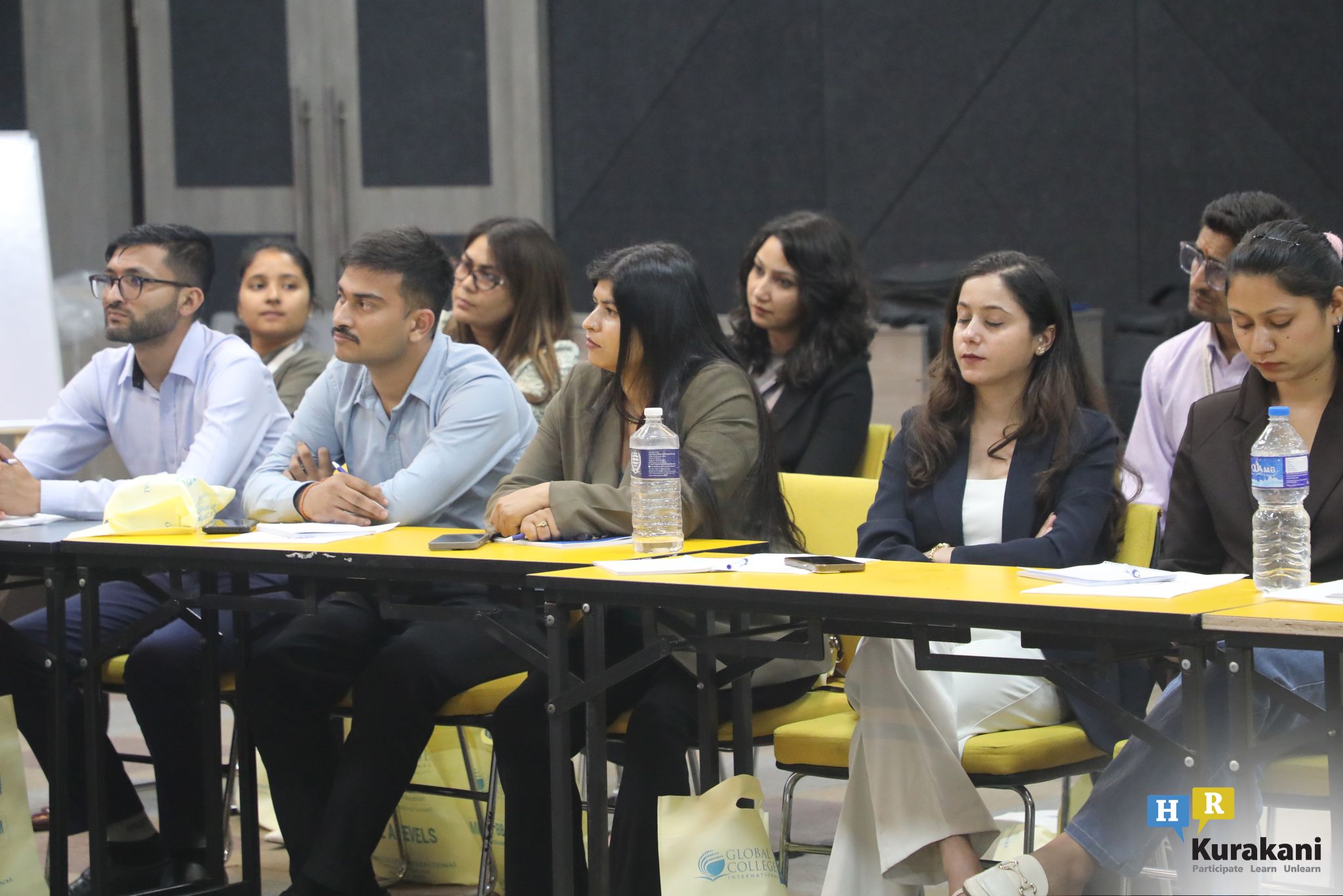 Mr. Sagar Gurung, Operations Manager at Bloom Park Clinic Pvt Ltd, said that his company was using a manual method for data collection and tracking before, and that data mismanagement was a big issue, causing inefficiency.
“It was a lot of work, but nothing productive.”
He acquired knowledge in the fields of learning and AI tools like Claude and ChatGPT Codex, then built software systems to streamline file, document, and communication management.
He also reported that companies are able to develop their own designed software according to their needs and values.
However, Mr. Shailendra Raj Giri reminded participants that while using AI and technology:
“The ethics should be maintained, and the privacy of the customers should be kept."
Tracking Productivity: Activity vs Results
Ms. Sulochana Kadel, Head of Human Resources, from Yoddha Lab Pvt. Ltd shared that their organization created such programs as Nepal HRM, onboarding and offboarding systems, and activity trackers to track employee productivity.
The systems can:
- Track productive time
- Monitor employee activities
- Analyze work patterns
- Identify productivity levels
Mr. Ujjwal Sundas, Managing Director, Samata Foundation, spoke up in the discussion with a sound concern:
“Yes, people are busy, but is there any way that you can get a sense of the effectiveness (from the outcomes) of how busy they are?”
Mr. Sulochana Kadel replied:
“When results come, their productivity/busyness can be tracked.”
The focus was placed on the fact that although there are tools that can measure activity, what is the real measure of productivity is results.
Challenges in Measuring Productivity
Discussion of other industries in which it is difficult to measure productivity.
Mr. Govinda Shrestha, CEO at Shetal Real Estate, shared that though it is useful to have CRM and HRM tools, measuring productivity in the field is still challenging, particularly in sectors such as real estate.
“They're in motion but no motion.”
This sparked a wider conversation about the part HR, leadership, and management play in the program of performance management.
Mr. Shailendra Raj Giri explained:
“The team leaders should be given empowerment to be the HR of their team. In corporate, hierarchy should be maintained, and there should be a line of command.”
However, he went on to say that tools can't measure productivity entirely, and HR needs to find people who can help them achieve results.
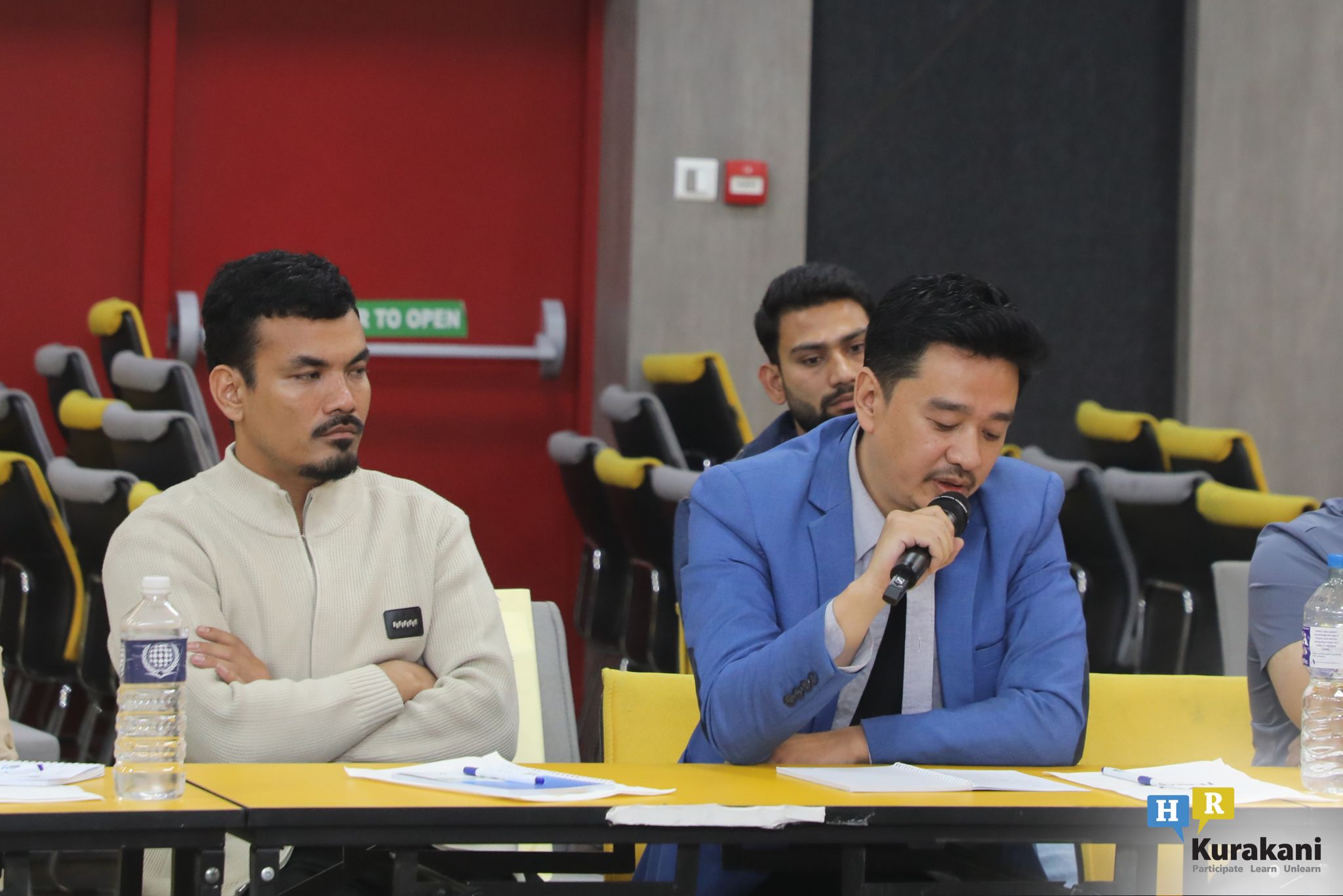 Hiring the Right People for Productivity
There were a lot of comments about recruitment and finding good employees during their hiring process.
Mr. Sagar Gurung said two rounds of interviews are held while hiring for a high-level position in his organization, in which the first round is normal and easy, where basic questions are asked, and in the second round, candidates present on a topic to the team for five minutes.
This helps evaluate:
- Communication skills
- Confidence
- Personality
- Understanding level
- Ability to manage discussions.The skill of conducting a discussion.
Entry-level applicants were tested on practical skills, like their level of computer programs (in this case, Excel), Ms. Suprina Shrestha, Hr Manager at Theego Clean Energy Pvt Ltd, explained, and role-specific skill tests were given depending on the job descriptions.
Sudhir Dhungel, HR Practitioner and Consultant from Chaudhary Group, explained the STAR Method:
- Situation
- Task
- Action
- Reason
This approach allows their organization to evaluate the applicant's behavior in a workplace scenario or challenges.
As per Mr. Shailendra Raj Giri:
“The STAR method could assist HR in assessing the candidate's skill level and deciding whether they are suitable for the job or not”.
Organizational Fit and Value-Based Hiring
Another discussion point was regarding organizational fit and culture in hiring.
Representatives of Teach for Nepal presented that they manage a full-day assessment centre at which learners take part in the following:
- Presentations
- Role plays
- Teamwork exercises
- Group discussions
- Organizational value-fit assessments
It is intended to recruit candidates who fit in with the value system and culture of the organization, and not only their technical abilities.
Likewise, the participants shared feedback regarding the need to pose situational queries to applicants to boost their confidence and encourage them to come up with their own answers and methods.
Productivity, Culture, and Employee Management
The value of workplace culture and employee management to productivity was emphasized by several speakers.
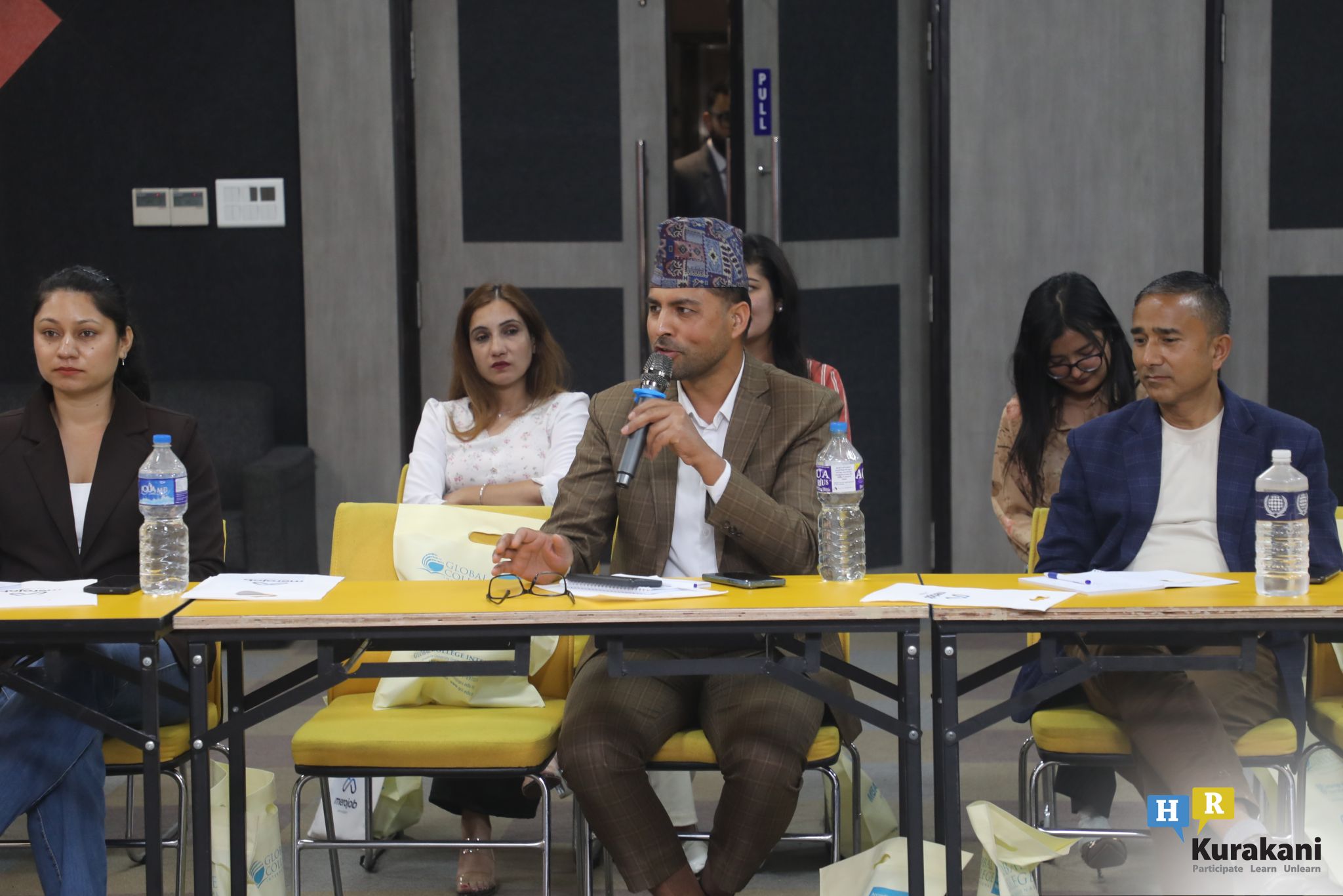 Mr. Padam Prasad Subedi explained:
“Each office is different and depends on people's attitude towards their employees”.
Mr. Shailendra Raj Giri replied:
Our first point is that we should see ourselves, see whether we can make people manage and work or not.
“First, we should see our own reflection.”
The discussion focused on the fact that organisations have to establish a setting that ensures employees have awareness of the company's aims, and that they are involved and have their own aims and visions set in line with the company's aims.
KPIs, OKRs, and Accountability
KPIs (Key Performance Indicators) and OKRs (Objectives and Key Results) were among the topics the group deliberated on.
It's at their company that they have OKRs with other members of the team on a quarterly basis, learning from one another, and having OKRs often that are held accountable.
However, challenges remain.
Ms. Pranita Adhikari, Learning & Development Coordinator at My Space Pvt. Ltd., explained that while the main focus was on prioritizing OKRs, over time, they were abandoned, substituting them with KPIs as a means of measuring progress.
She also discussed the challenge of establishing KPIs for department heads and high management.
Mr. Shailendra Raj Giri replied:
“The Department Head’s KPI is the KPI of employees who work in his/her department”.
Psychological Safety and Employee Motivation
Psychological Safety and Employee Motivation are directly connected.
Motivation, psychological safety, and employee care were also dominant themes of the discussion.
Ms. Reema Lama, Finance Manager, Bloom Park Clinic Pvt Ltd, explained:
“If the employee's objective is congruent with the company's objective, then it could be productive”.
She added that:
“Gen Z employees typically work for Purpose rather than salary”.
Staff should be feeling psychologically safe:
- Positive Feedback should be delivered in the open, in the presence of other people and groups.
- The negative feedback should be delivered in person, in private.
Paying attention to creating positive and supportive workplaces was clearly cited as critical to increased productivity.
The sense of desirability and trust at work.
Retention Challenges and Workplace Trust
A lack of trust and an unpleasant atmosphere are being reported as some of the reasons why employees leave organisations, said Mr. Ranjan KC.
The allegations of deeper concerns also included culture in the workplace and transparency within the company, one such report said, saying that one employee questioned the rest of the company on the way they paid workers.
It was unanimously agreed that there is a need to promote culturally appropriate, trustworthy environments where staff feel valued and safe in their work environment.
Education, Internships, and Workforce Readiness
Those from educational institutions also shared their views.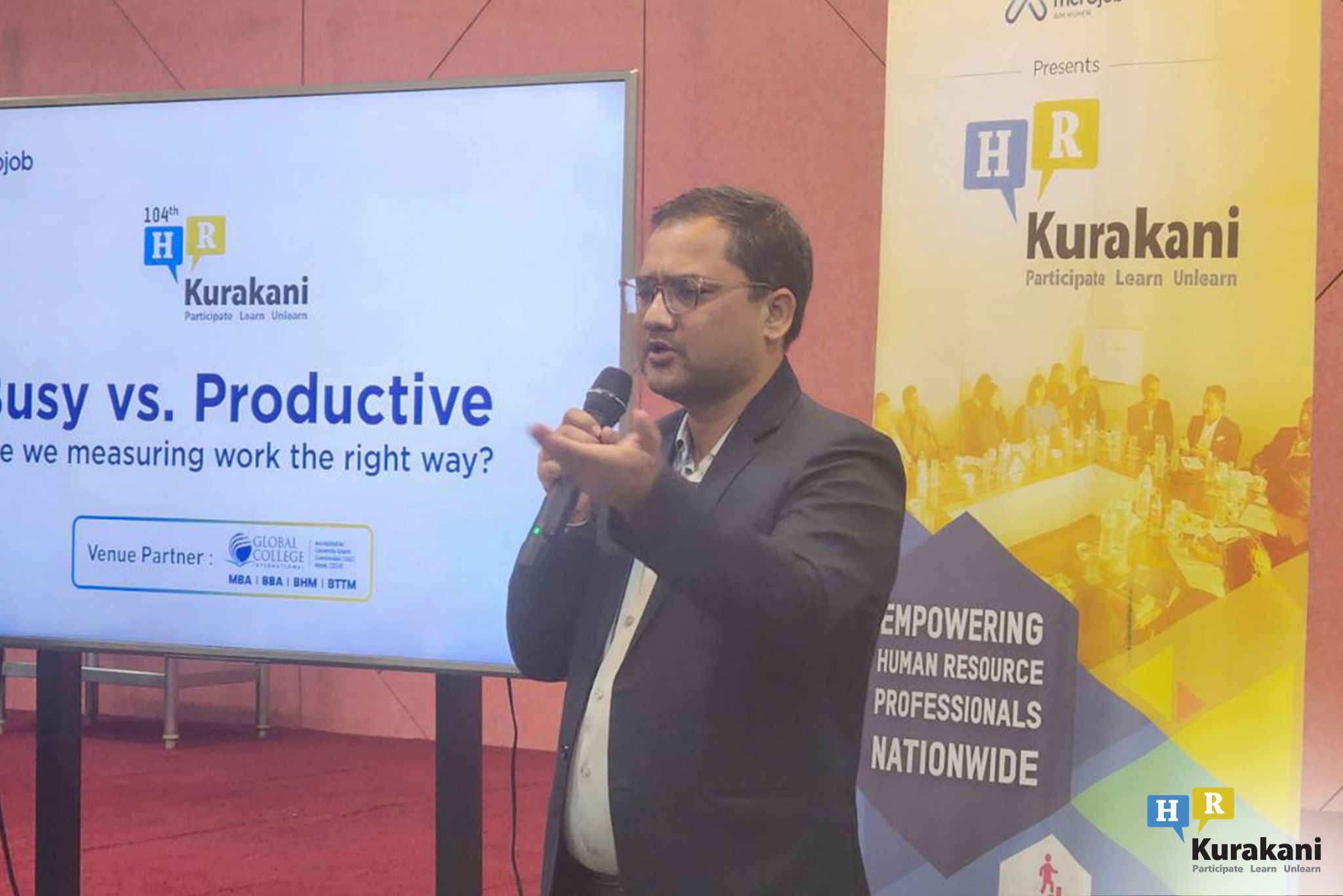
Mr. Kishor Kumar Gautam, Executive Vice-Principal at Global College International, pointed out that the internship programs in Nepal do not support students well.
It was discussed that:
- Students sometimes lose their sense of self by falling into the trap of work!
- Young people tend to migrate from Nepal due to a lack of opportunities and support.
- There needs to be an effort to build ecosystems of growth together between organisations and colleges.
- Students are exploited in organizations in the name of work.
Mr. Shailendra Raj Giri replied:
“It should be mentoring, teaching, and learning from the company for the interns, not hard and heavy work for the interns.”
Final Takeaways
In conclusion, according to the Cooperation and discussion, improvement of productivity cannot be done in one stroke.
Mr. Thomas Dhakal, Recruitment & HR Operations, Chaudhary Group, said:
“One minute or a day is not enough to make a difference in productivity, as for patience, the employees and employers should have patience to make a difference’’.
![]()
![]() Focus on:
Focus on:
- Establishing a productive work setting.
- Establishing a mission statement and action plan for employees/workers and the organisation.
- Building accountability systems.
- Using tools and technology responsibly.
- Empowering workers to develop and thrive.
- Nurturing proactivity, improvisation, and creative thinking.
![]() Mr. Shailendra Raj Giri reminded us of the significance of repeating the following at the end of the session:
Mr. Shailendra Raj Giri reminded us of the significance of repeating the following at the end of the session:
“Let's improve the employees, so that they can increase productivity and reduce Busyness.”