Since its inception in 2009, Merojob has been at the forefront of connecting job seekers and employers in Nepal. The goal is to provide a comprehensive platform for job seekers to find jobs in Nepal and for employers to find the right fit for their organization. We pride ourselves on being a reliable bridge between hiring employers and job seekers and have established ourselves as a national leader in recruitment solutions.Read more...
Gen Z and the Future of Work: Managing Employee Dynamics in the Modern Workplace
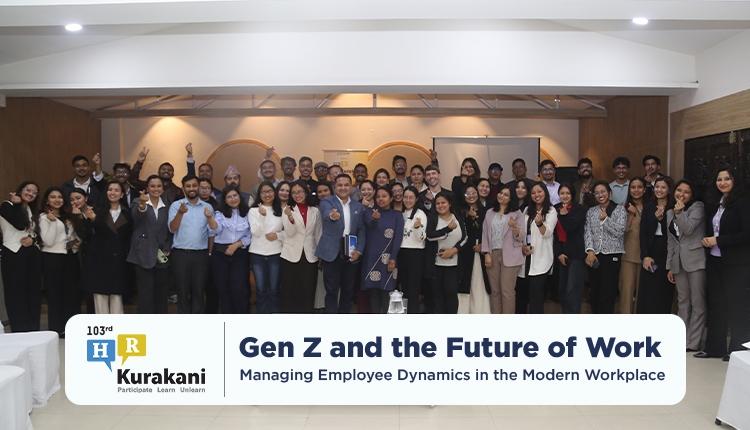
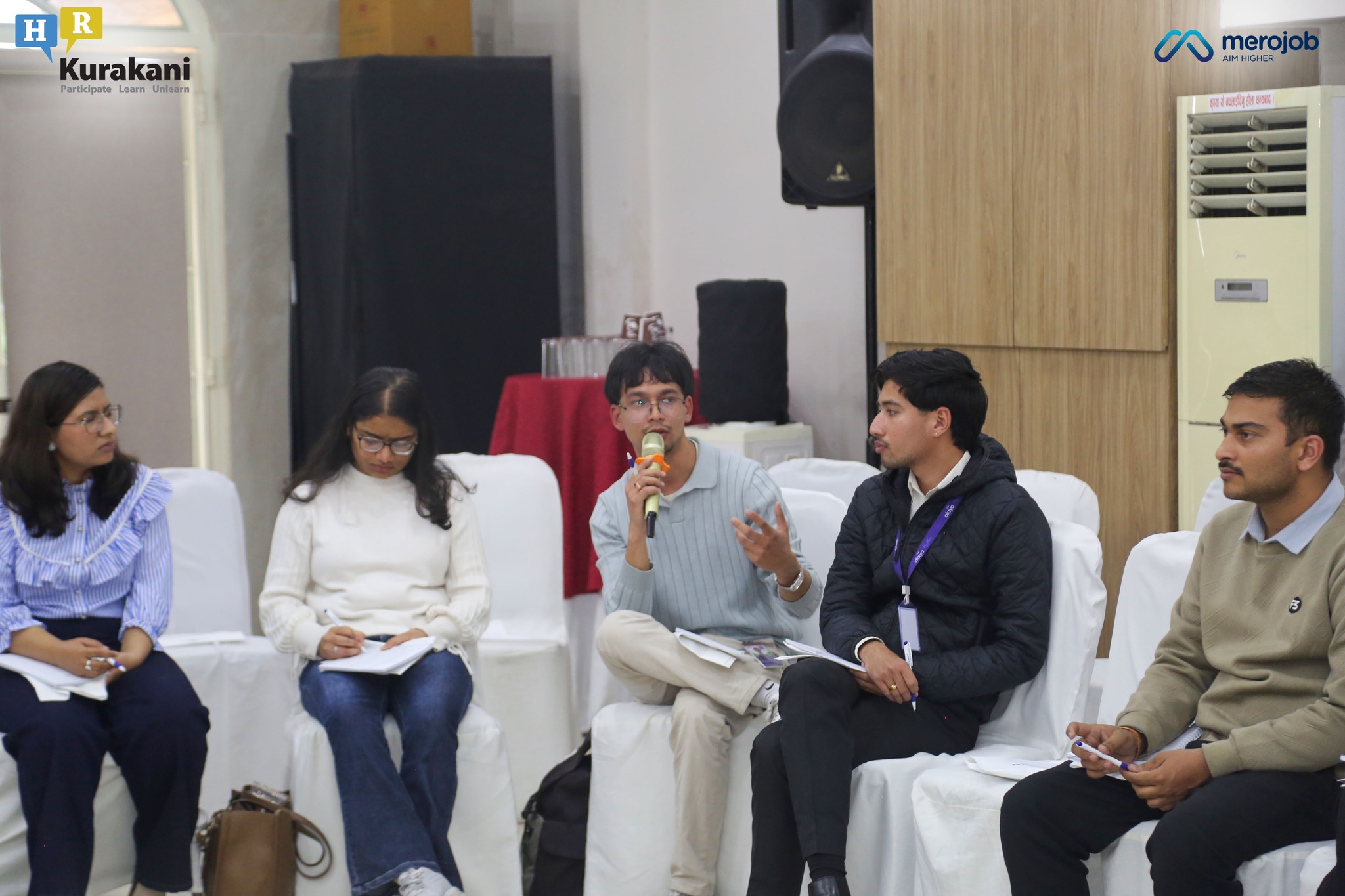
The 103rd issue of HR Kurakani was not only a discussion but also a valuable moment to ponder over changes that the contemporary workplace is going through and the increasing role of Gen Z in deciding the future of work. The discussion was organised with HR professionals, business leaders, recruiters, and educators and centred around the topic of Gen Z and the Future of Work: Managing Employee Dynamics in the Modern Workplace, uniting a variety of voices in a free and dynamic environment on April 8, 2026, at Alfa Beta House.
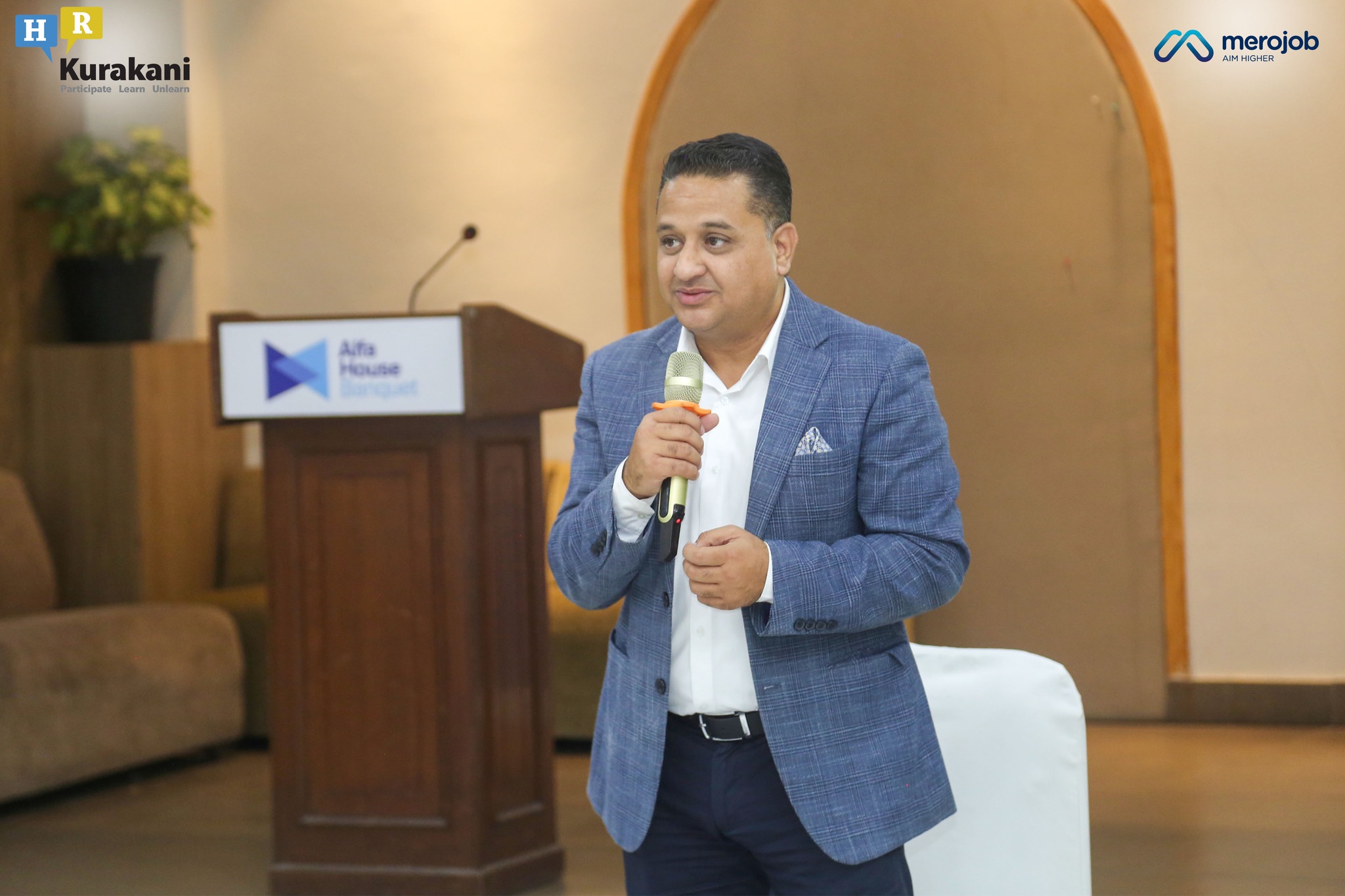
This session was moderated by Mr Shailendra Raj Giri, Founder and MD of Mero Job Limited, who gave insights into how workforce expectations have evolved over the years and how organisations need to adjust to cope with a multi-generational workforce. He emphasised that HR practices in Nepal are on the rise, and as Gen Z and the next generation of Gen Alpha enter the workforce, organisations need to redefine their traditional management, engagement, and culture practices.
The modern business world is rapidly changing because of the change in employee expectations, proliferation of technology and transformation of culture. Gen Z employees are purpose-driven, flexible, mental health and transparency-oriented, and organisations must abandon the conventional structures. Throughout the session, HR experts and industry leaders discussed their experiences and their practical strategies to deal with engagement, performance and retention in this new environment.
Topics that were addressed were employee engagement, ownership, feedback systems, flexibility and cultural transformation. Whilst organisations are initiating different programmes to attract employees, the session identified that meaningful jobs, effective communication and a conducive environment are far more effective. It also highlighted transforming the style of leadership, the adoption of reverse mentoring, and being ready to counteract the increased role played by technology, including AI, in shaping the future workforce.
Changing Workforce Expectations
The session started with a discussion of how Gen Z employees are changing workplace expectations.
Mr Shailendra Raj Giri highlighted the evolving HR landscape in Nepal.
“There were no proper HR systems before the 2000s. Even now, practices are still developing in Nepal”.
He also pointed out a key behavioural shift:
“Around 47% of Gen Z employees leave jobs because their work does not align with their personal values or social impact.”
Gen Z is more focused than past generations:
Direction and meaningful tasks.
Self-values and social influence.
Mental health and well-being
Flexibility in work
Adding to this, it was noted that:
“92% of graduates believe organisations should actively support mental health.”
This clearly shows that work is no longer just about salary; it’s about fulfilment.
Engagement vs. “Fun at Work”
A major part of the discussion focused on employee engagement and workplace culture.
Many organisations shared the activities they conduct:
Weekly fun sessions and games
Employee clubs and community groups
Festival-based events
Reward and recognition programmes
Laxmi Bhatta, People & Culture Officer, Globally Nepal Private Limited:
“We organise one-hour engagement activities every Friday, including games and festival-related programmes.”
Thomas Dhakal, Deputy Manager at Chaudhary Group:
“We ensure at least two engagement activities every month and create a community for planning these initiatives.”
However, Mr Shailendra Raj Giri made an important distinction:
“Employee engagement and employee refreshment are different.”
As it was mentioned during the discussion, the actual engagement is not limited to games and entertainment. A good working environment, a sense of belonging, and a valuable contribution are much more effective at motivating employees.
Possession, Feedback and Performance Systems.
Gen Z employees respond strongly to ownership and accountability.
Nirdosh Bhandari, Director of HRM at Himalayan Ridge Pvt. Ltd., shared insights from his organisation:
“Around 60% of our employees are Gen Z. They need ownership. They want to execute work and feel like they are running the company.”
To support this, organisations are implementing:
KPI-based performance systems
Task-based roles
Quarterly bonus structures
Continuous feedback sessions
Jordan Ulmer, CEO at MIAM Technology PVT LTD (Startup Team’s), explained a structured approach to employee development:
“For employees to grow in critical thinking, they need ownership, constant feedback, and rewards.”
This includes:
Daily objectives and KPIs
Regular short feedback sessions
Long-form review meetings
Performance-based incentives
Mr Shailendra Raj Giri also emphasised:
“Gen Z loves challenges. Give them challenges, and they will think critically.”
Flexibility and Transparency Issues.
One of the largest Gen Z expectations is flexibility.
They want:
Flexible working hours
The liberty to decide on the way and place of work.
Involvement in decision-making
Meanwhile, they also require transparency.
Mr Shailendra Raj Giri noted:
“Gen Z would like to learn about the performance, growth, and achievements of a company”.
But this poses a challenge to organisations:
What is your compromise between flexibility, transparency, and structure?
Raj Kumar Neupane, HR Manager at Varosa Technology Pvt.Ltd suggested:
“Individuals ought to be time-free as opposed to work-bound. There is a need to enhance communication among team members and leaders”.
To deal with these expectations, it is imperative to develop an atmosphere in which the employees feel free to speak their minds.
Cultural Change and Backwards Mentoring.
The old hierarchical models are on the decline.
Mr Shailendra Raj Giri emphasised:
“The previous organisational model is no longer up to date. Culture should be renewed promptly”.
Organisations are now moving towards:
Collaborative work environments
Open communication
Idea-sharing platforms
Reverse mentoring
Chitransi Dokania, HR, Finance&Operations Coordinator at Alliance Asia Nepal representative shared:
“Gen Z does not only want to be trained, but to train us, with their ideas being heard”.
Reverse mentoring, whereby the younger workers mentor senior leaders in trends, technology and so on, is becoming a more relevant concept.
Artificial Intelligence, Technology, and the Future of Work.
The importance of technology (in particular, AI) in the processes of Gen Z working and learning is significant.
Mr Shailendra Raj Giri noted:
‘‘AI is not the future; AI is the present”.
It was emphasised that:
Approximately half of Gen Z already uses AI to enhance productivity.
Two out of every five Gen Zs are afraid of AI stealing their jobs.
This generates the possibility and anxiety.
Experts recommended that organisations ought to:
Make the appropriate tools and technology available.
Give sufficient training and guidelines.
Take into account the employee's security.
Critical thinking, problem solving and entrepreneurial thinking are the skills that need to be acquired in this evolving environment.
Diversity In Gen Z.
One interesting fact presented in the discussion is that Gen Z is not a homogeneous population.
It is obvious that there are differences between:
Urban Gen Z
Rural Gen Z
“Rural Gen Z is more likely to be committed, whereas urban Gen Z is less likely to commit”.
This brings out the point that a universal solution cannot be effective in handling employees.
Organisations need to learn about the various backgrounds and adjust their strategies to accommodate such backgrounds.
Clarity, Communication and Retention.
Effective communication is very important to employee retention.
Riyana Shrestha, HR Manager at Devfinity Solutions, shared an important insight:
“It is one of the main reasons that our employees stick around, as we are extremely open throughout the hiring process”.
She added:
“When there is a failure in expectations, we do it at the initial stage”.
This approach helps:
Reduce attrition
Build trust
Establish an excellent working environment.
She also emphasised the role of equality:
“No matter the generations, all are treated equally in our organisation and that has contributed to creating a supportive environment”.
Moving Forward.
It was agreed in the discussion that handling Gen Z goes beyond altering policies; it involves changing the mindset.
Organisations need to be conscious of:
Flexibility and transparency
Continuous feedback
Employee empowerment
Ownership and accountability
Cultural transformation
As Mr Shailendra Raj Giri summarised:
“We must embrace change. Gen Z are not only the future but is already defining the present”.
Conclusion
The session on HR Kurakani emphasised that employee expectations, swift technological development, and transformed workplace dynamics are shaping the future of work.
Gen Z is energetic, has new ideas and expectations, yet it questions the traditional systems.
To deal with this generation, organisations need to:
Listen actively
Adapt continuously
Develop inclusive and dynamic cultures.
Properly done, this change will not only enhance employee engagement but also produce a future-ready and strong workforce.