Since its inception in 2009, Merojob has been at the forefront of connecting job seekers and employers in Nepal. The goal is to provide a comprehensive platform for job seekers to find jobs in Nepal and for employers to find the right fit for their organization. We pride ourselves on being a reliable bridge between hiring employers and job seekers and have established ourselves as a national leader in recruitment solutions.Read more...
108th edition HR Kurakani:Must-Know Finance for HR Professionals
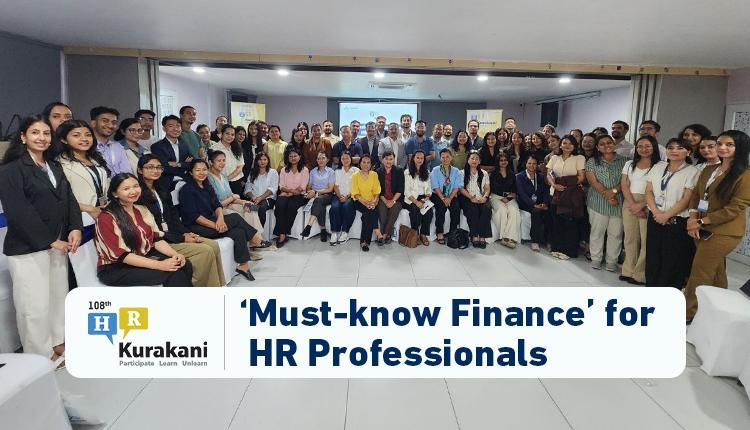
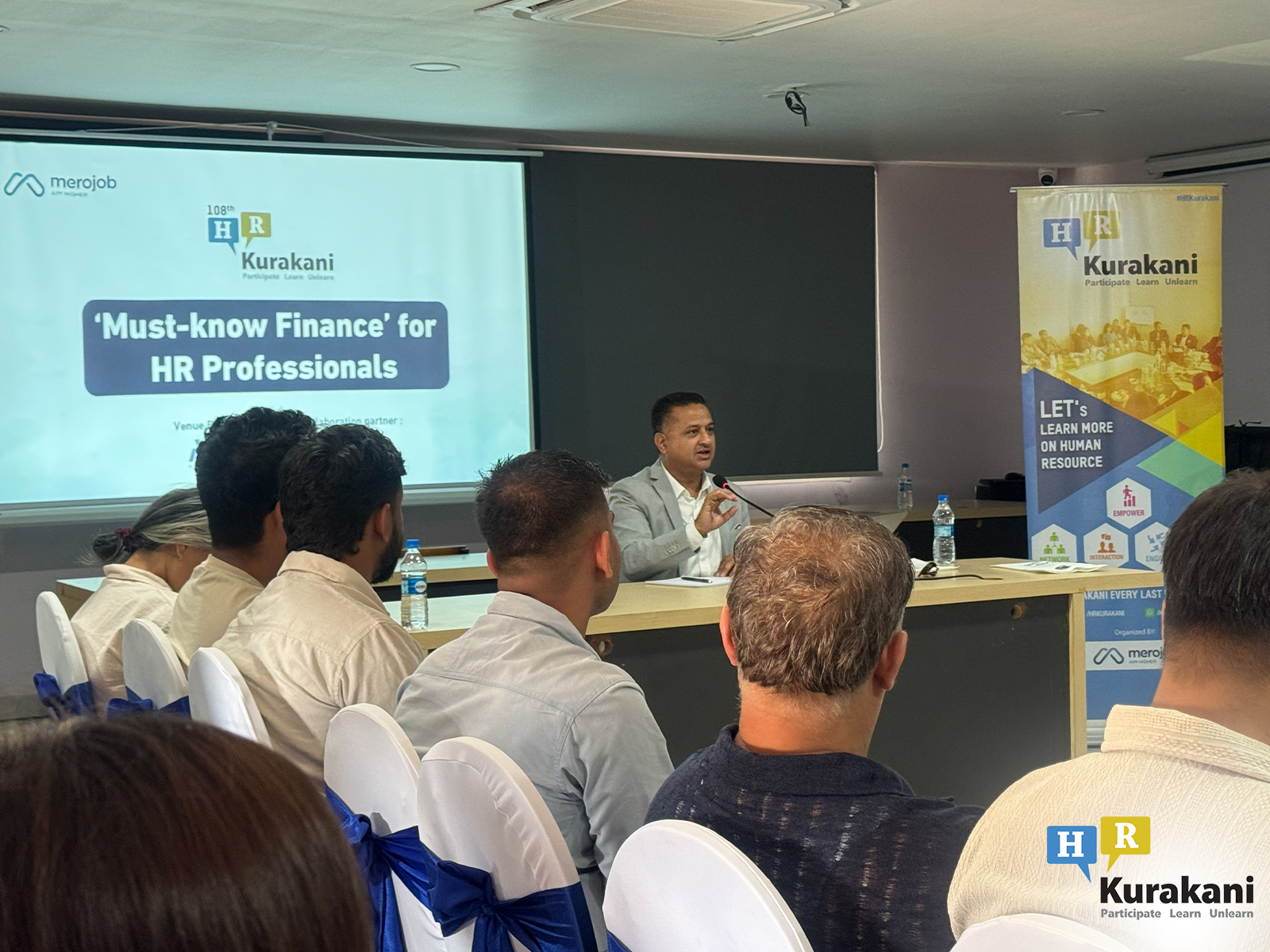
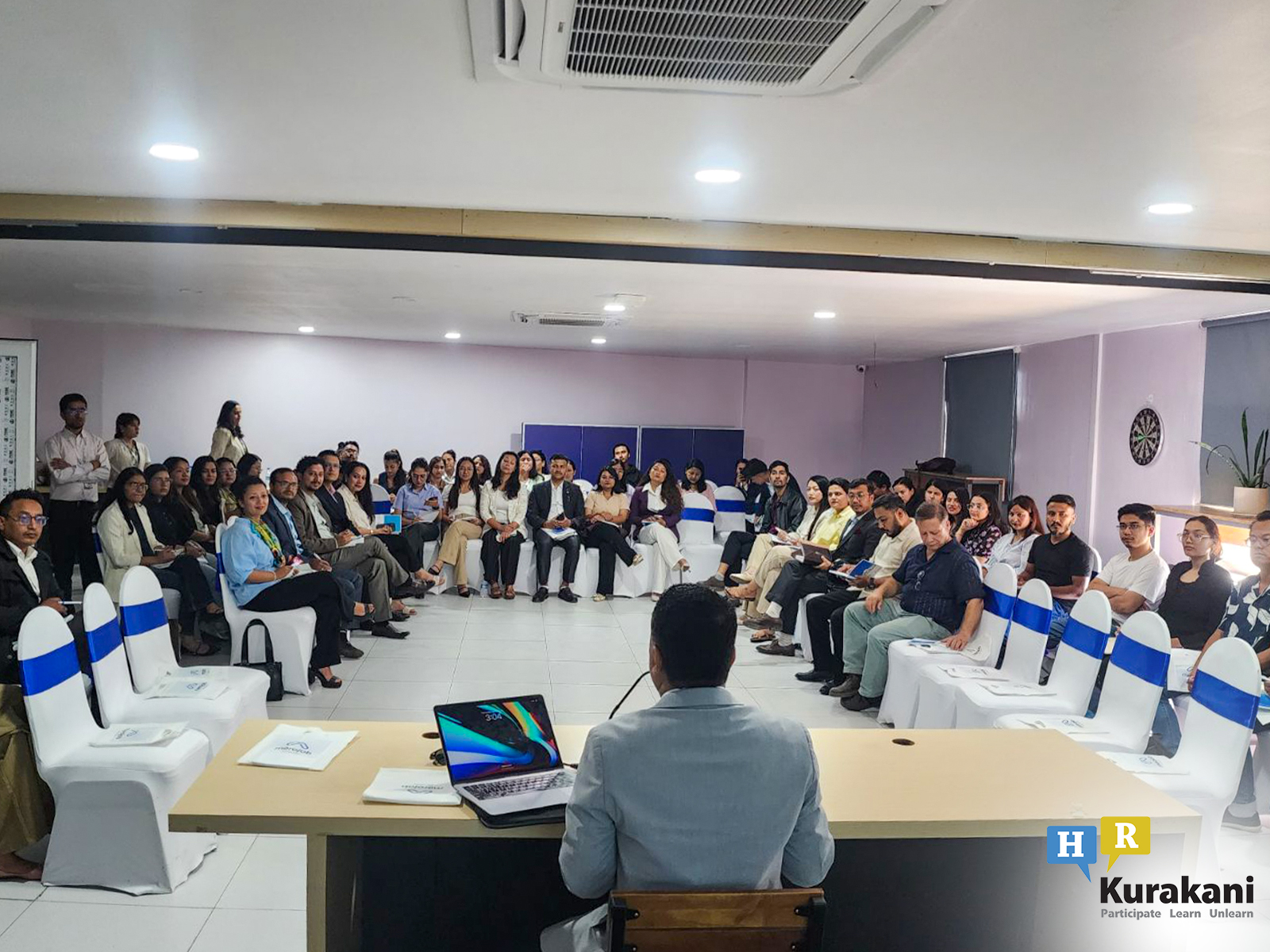
The 108th edition of HR Kurakani was an insightful discussion that brought together HR professionals, business leaders, and finance experts to explore the financial knowledge HR professionals need to make informed people and business decisions. The session, titled “Must-Know Finance for HR Professionals,” was held on September 16, 2026, at AGK Partners Nepal, Paanipokhari Heights.
Moderated by Mr. Shailendra Raj Giri, MD of Merojob Ltd., the session focused on the financial knowledge HR professionals need in their day-to-day work, from understanding financial statements and payroll to budgeting, tax, SSF, employee well-being, and financial literacy.
The session was organized by Merojob Limited in collaboration with ACCA Nepal, and AGK Partners Nepal as the venue partner.
Why Finance Matters in HR
The discussion began with Mr. Shailendra Raj Giri asking why finance is important and why HR professionals need to understand it. He highlighted that every people-related decision can also involve a financial decision. Hiring employees, managing payroll, planning training, handling benefits, and calculating departmental or individual costs all have financial implications.
The discussion made one point clear that HR professionals do not need to become finance experts, but understanding financial numbers can help them make better-informed decisions and communicate more effectively with finance teams.
Understanding the Balance Sheet and Profit and Loss
One of the first topics discussed was two basic financial statements, which were the Balance sheet and Profit and Loss Statement.
Mr. Sulav Shrestha, DCEO of Himalayan Securities Capital, explained that a Balance Sheet shows an organization's financial position at a specific point in time. It includes three main components: Assets, Liabilities, and Equity. Assets are what an organization owns or controls, Liabilities are what the organization owes, and Equity is the owners' or shareholders' interest in the organization The basic accounting equation is: Assets = Liabilities + Equity
A Profit and Loss Statement, meanwhile, shows the financial performance of an organization over a particular period. It includes revenue, expenses, and the resulting profit or loss. The basic calculation is: Profit = Revenue − Expenses. The discussion emphasized why understanding these basic financial statements can be useful for HR. When HR understands how costs and financial performance are reflected in an organization, it can have more informed conversations with finance and management.
Mr. Shailendra Raj Giri also addressed the importance of HR and finance teams discussing financial records and ratio analysis and encouraged HR professionals to approach finance when they need to understand the numbers behind their decisions.
OPEX and CAPEX: Understanding Business Expenses
The discussion then moved to OPEX and CAPEX, two financial terms that HR professionals may encounter while working with budgets and organizational expenses.
Mr. Sajan Pathak, OM of Upaya Business Solution, explained that OPEX, or operating expenditure, refers to the money spent on the day-to-day operations of a business. Examples of OPEX are employee salaries, office rent, electricity, internet bills ad so on.
CAPEX, or capital expenditure, refers to expenditure on long-term assets or improvements that an organization expects to use for more than one accounting period. Understanding this difference can help HR professionals communicate more clearly when discussing organizational budgets and employee-related expenses.
What EBIDTA IS and Why HR Should Understand Profitability
Another question raised during the session was whether HR professionals need to understand EBIDTA and profitability.
Mr. Ravi Bhattarai, Head of Finance and Business Operations at Merojob, explained that Earnings Before Interest, Taxes, Depreciation, and Amortization. It is used to look at the profitability of a company's core operations before considering interest, taxes, and amortization.
The discussion also focused on profitability and why it matters to HR. Since HR manages areas such as payroll and other employee-related costs, understanding profitability can help HR look at these costs from a broader business perspective.
The session emphasized that HR can act as a business partner by understanding the financial impact of people-related decisions rather than looking at them only from an HR perspective.
Importance of Excel for HR
Finance and HR work also involve a significant amount of data. This led to another question during the discussion: How much Excel does HR need to know?
Mr. Sulav Shrestha explained that Excel is useful for payroll, employee data, budgeting, reporting, and other HR activities. HR professionals may not need highly advanced Excel skills for every role. However, basic to intermediate knowledge can be useful, particularly functions such as LOOKUP and tools such as Pivot Tables.
Mr. Shailendra Raj Giri summarized the discussion by emphasizing that HR professionals should learn Excel, understand budgeting, and be able to communicate with finance teams in a way that supports financial understanding.
Connecting Employee Wellbeing With Finance
Employee wellbeing was another important part of the discussion. The question raised was how HR can convince finance to support mental wellbeing initiatives.
Mr. Ravi Bhattarai suggested that HR can look at the additional costs associated with issues such as hiring, attrition, vacant positions, and productivity.
Instead of presenting mental wellbeing only as an employee benefit, HR can also explain its connection to business costs. HR can support such proposals by identifying relevant costs, comparing the cost of a program with potential savings, starting with a small pilot, and tracking measurable outcomes such as participation, feedback, retention, and absenteeism. This approach can give both HR and finance a common and more practical basis for discussion.
Understanding Payroll Cost
Payroll was another major topic of discussion. Mr. Sajan Pathak explained that payroll cost generally includes basic salary, allowances, overtime, bonuses, incentives, employer contributions, and benefits. Applicable deductions can include tax, SSF/PF, CIT, loans, and unpaid leave.
For HR professionals, understanding how these components are calculated is important because payroll is closely connected to both employee compensation and organizational cost. The discussion also reinforced that payroll is an important area of knowledge for HR professionals.
What HR Should Know About SSF
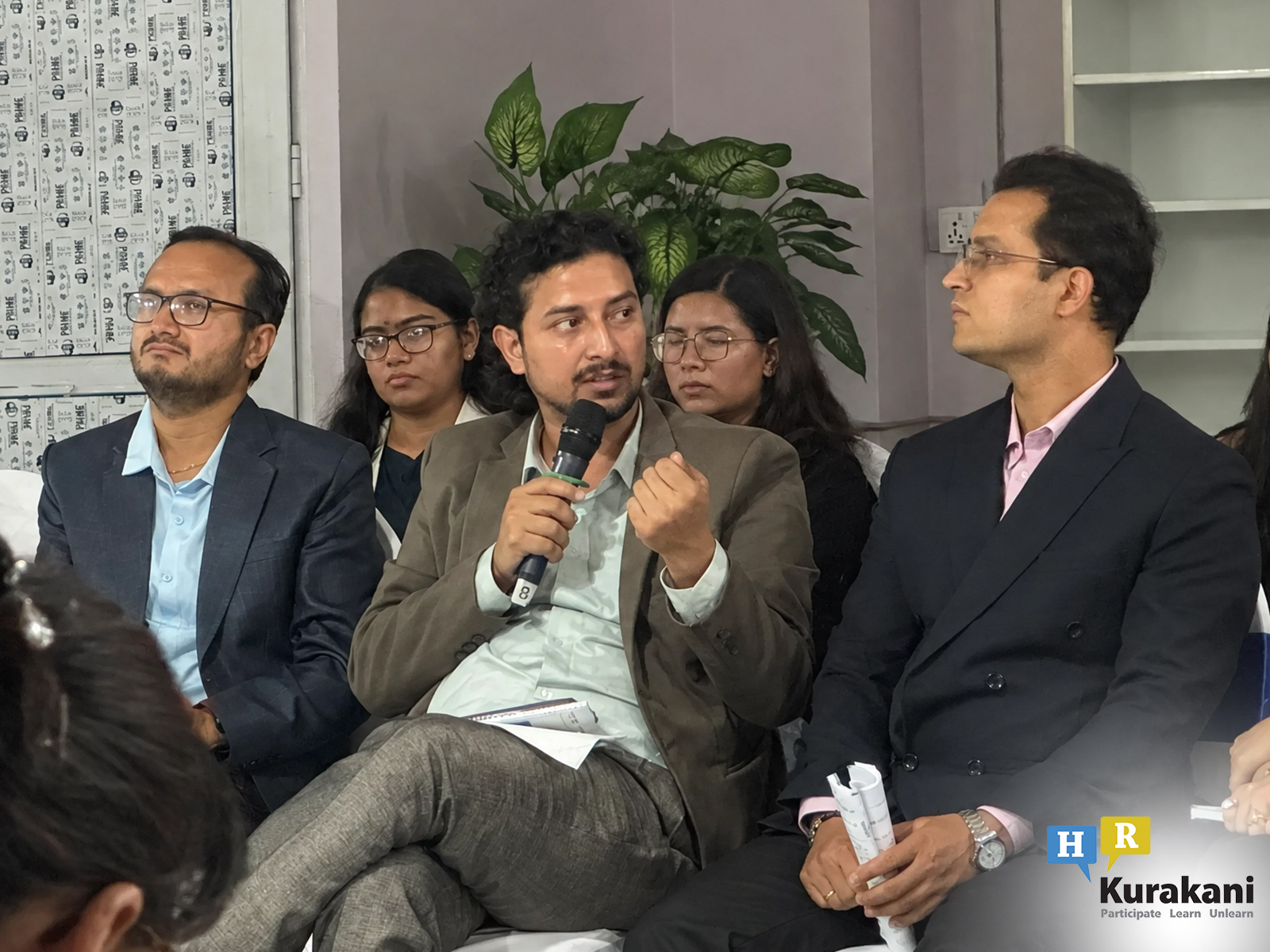
During the discussion, Ms. Praptee Shree Hamal, Human Resources Officer at Karkhana Samuha, raised a question regarding the importance of shifting to the Social Security Fund (SSF) under the current legal context.
Responding to the question, Mr. Ravi Bhattarai explained that SSF is compulsory for applicable employers and employees under the relevant laws and procedures. He shared that the standard contribution discussed during the session was 31% of basic remuneration, consisting of 20% contributed by the employer and 11% by the employee.
He emphasized that HR professionals need to ensure eligible employees are registered, contributions are calculated correctly, and monthly payments are made according to applicable requirements.
The discussion also covered foreign employees. Mr. Rukesh Machamasi, HR Managerat Korea Visa Application Center, asked whether SSF is compulsory for international workers.
In response, Mr. Ravi Bhattarai explained the applicability discussed during the session and noted that foreign workers staying for 183 days were discussed in relation to SSF requirements.
Payroll Structuring, Tax, and Employee Incentives
The session also explored payroll structuring and tax-saving elements. The discussion covered areas such as SSF contributions, approved retirement contributions, life and health insurance, employee benefits, and retirement funds such as SSF, EPF, and CIT.
Participants also discussed whether organizations help employees calculate and manage personal tax obligations.
Ms. Rasna Shrestha, HR Manager atJavra Software Nepal Pvt. Ltd., shared that they support employees with tax-related guidance when needed. Similarly, Mr. Utsav Kumar Mishra, Senior HR Executive at Bagaicha Fine Dining Restaurant, shared that they also provide consultation and use CIT as one of the available options.
Another question focused on financial incentives and taxation. Responding to this, Mr. Sajan Pathak explained that incentives provided to employees generally fall under employment income and applicable taxes need to be calculated accordingly.
Helping Employees Build Financial Literacy
The discussion also highlighted the role HR can play in improving employee financial literacy. According to Mr. Sulav Shrestha, employees can be encouraged to manage their finances by dividing income into needs, savings, emergency funds, debt obligations, and future goals.
He recommended maintaining a monthly budget, tracking unnecessary expenses, building emergency savings, and saving or investing consistently for future objectives. He further suggested providing at least one financial literacy training annually and dedicating a financial health day twice a year to encourage financial awareness among employees.
Summarizing the discussion, Mr. Shailendra Raj Giri noted that financial understanding is an important life skill and emphasized the value of financial planning and literacy.
Employee Investment and Workplace Productivity
The conversation also explored whether employee participation in the share market could affect workplace focus. Responding to the question, Mr. Kama Dhital, CEO of Pahi Investment/Securities, stated that trading activities should not be carried out during work hours.
Adding to the discussion, Mr. Sulav Shrestha suggested that long-term investing may be a more practical approach than activities that could create workplace distractions. The discussion emphasized maintaining a healthy balance between personal financial activities and professional responsibilities.
Managing Training Bonds and Employee Agreements
Another practical HR challenge discussed during the session involved training bonds and employees who leave an organization after receiving company-sponsored training. Participants shared experiences involving employees who were sent abroad for training but later refused participation or left the organization before completing the agreed service period.
Ms. Sanisha Baral, HR & Admin Manager ofShasheela Motors Pvt. Ltd., raised concerns regarding disputes that can arise when employees leave before completing agreed commitments.
Responding to the discussion, Mr. Ravi Bhattarai highlighted the importance of clearly mentioning applicable terms, conditions, and penalties within employment agreements. Mr. Sajan Pathak suggested communication and mediation as practical approaches to resolving such disputes and noted that legal channels may also be available where necessary.
Adding another perspective, Mr. Ujjwal Sundas, Founder ofSamata Foundation, suggested that organizations should focus on selecting motivated employees for training opportunities rather than sending employees unwillingly. He noted that such employees are more likely to remain with the organization and share their learning with colleagues.
Key Takeaway from the Session
Throughout the session, one message remained consistent: finance is no longer separate from HR. The discussion reinforced that HR professionals do not need to become finance experts. However, understanding financial concepts, payroll structures, budgets, profitability, and organizational costs can help them become stronger business partners and contribute more effectively to organizational success.
As the session concluded, Mr. Shailendra Raj Giri thanked all participants for their active involvement, valuable insights, and contributions to the discussion. He also acknowledged ACCA Nepal for the collaboration and AGK Partners Nepal for their support as the venue partner.