Since its inception in 2009, Merojob has been at the forefront of connecting job seekers and employers in Nepal. The goal is to provide a comprehensive platform for job seekers to find jobs in Nepal and for employers to find the right fit for their organization. We pride ourselves on being a reliable bridge between hiring employers and job seekers and have established ourselves as a national leader in recruitment solutions.Read more...
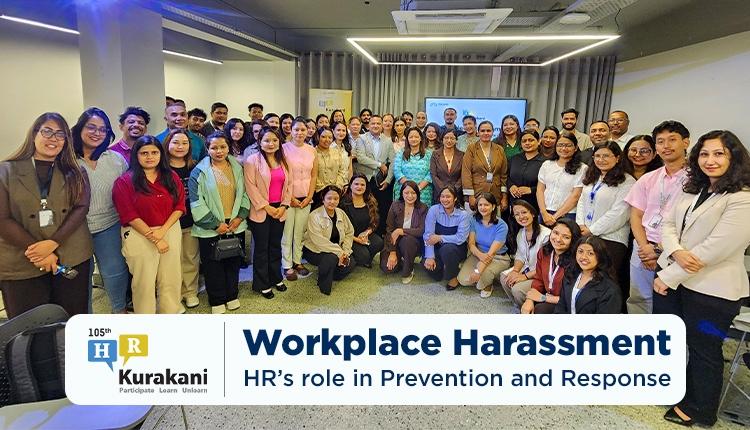
Workplace Harassment: HR’s Role in Prevention and Response
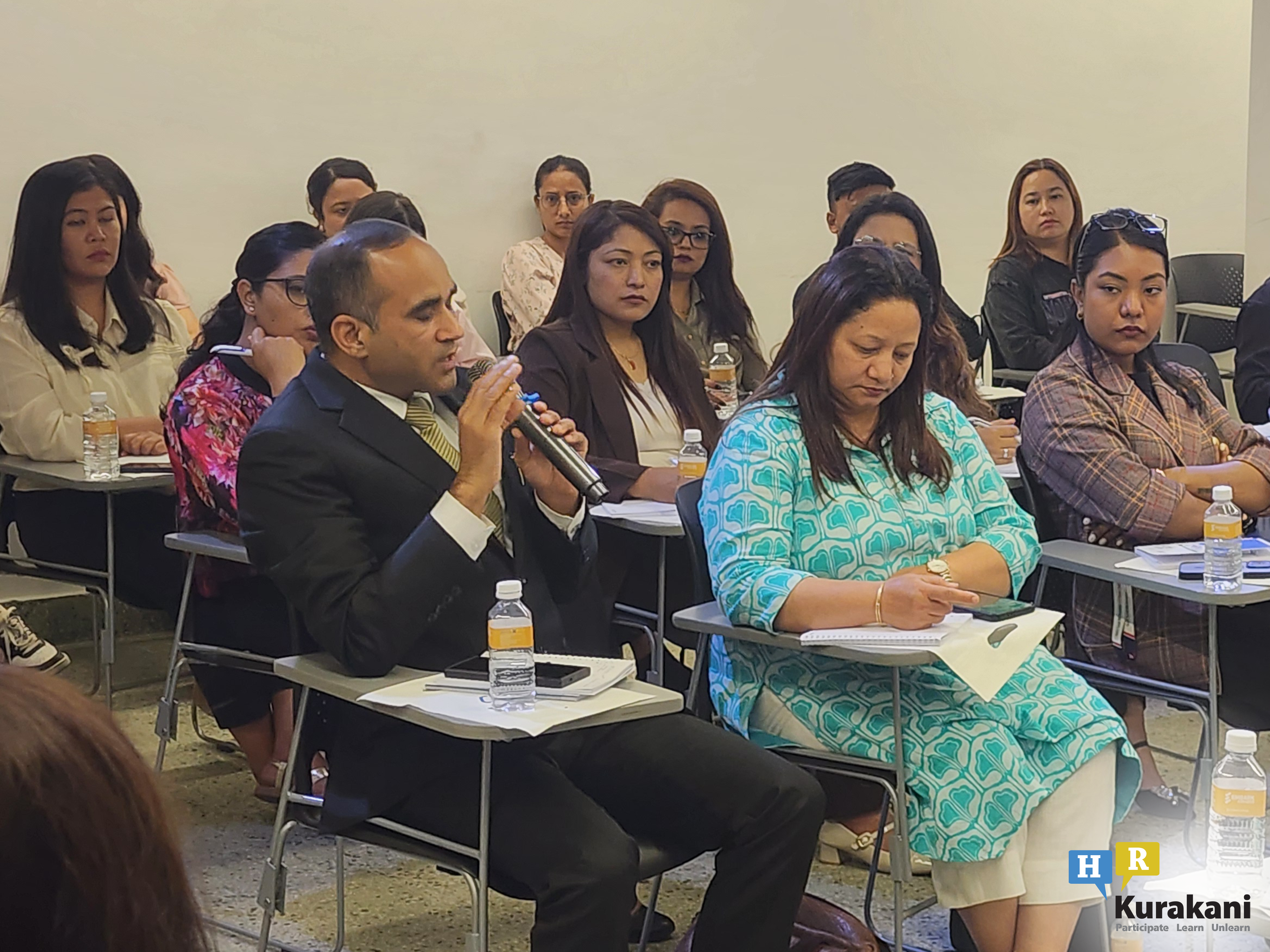
The 105th edition of HR Kurakani was not just any regular conference. It was a meaningful session for HR professionals, business leaders, legal experts, and mental health practitioners to come together and engage in an open conversation about one of the most sensitive yet critical workplace issues: Workplace Harassment, which was held on June 10, 2026, atEmbark College.
Moderated by Mr.Shailendra Raj Giri, Founder & Chairman of MeroJob Limited, the session explored the legal framework governing workplace harassment in Nepal, the psychological effects of harassment, and the practical challenges HR professionals face when implementing prevention and response mechanisms.
As organizations continue to prioritize safe, inclusive, and respectful workplaces, the discussion highlighted that workplace harassment is not merely a legal concern. It is also a fundamental requirement for employee well-being, organizational growth, and sustainable workplace culture.
Understanding Workplace Harassment in the Nepali Context
The discussion began with legal expert Mr. Tilak Bikram Pandey, Partner at Pioneer Law Associates, who provided an overview of workplace harassment and its legal dimensions. Mr. Tilak Bikram Pandey also mentioned that three laws in Nepal focus on workplace harassment, which are the Sexual Harassment at Workplace (Prevention) Act, Labour Act 2017, and National Penal (Code) Act. He explained that workplace harassment is generally categorized into two forms: Quid Pro Quo Harassment, in which employment-related benefits are linked to sexual favors, and Hostile Work Environment Harassment, in which unwelcome behavior creates an intimidating, offensive, or uncomfortable workplace.
Under Nepali law, workplace harassment can take physical, verbal, non-verbal, and psychological forms. One of the key challenges in addressing such cases is balancing intention and impact. While individuals accused of harassment may argue that they had no intention of causing discomfort, those affected may genuinely experience the behaviour as offensive or harmful. As a result, legal assessments often require careful consideration of context, perception, and surrounding circumstances.
Building on this perspective, Mr.Shailendra Raj Giri highlighted that Nepal has specific legal provisions addressing labor rights and workplace sexual harassment. He encouraged HR professionals to evaluate whether these legal requirements have been adequately reflected in their organizational policies and day-to-day practices.
The Influence of Culture and Perception
Adding another perspective to the conversation, Ujwal Sundas, Managing Director at Samata Foundation, emphasized that perceptions of harassment can differ significantly across cultures, communities, and social environments. Behaviours considered acceptable in one setting may be viewed as inappropriate or harassing in another.
The discussion highlighted that many individuals may not recognize harassment when certain behaviors have become normalized within workplace culture. For this reason, organizations have a responsibility to clearly define different forms of harassment and ensure employees understand what constitutes acceptable and unacceptable behaviour.
Awareness and education are considered critical components of prevention. Without a shared understanding of workplace expectations, employees may unintentionally engage in behaviour that causes discomfort to others or fail to recognize situations where harassment is occurring.
The Psychological Impact of Harassment
Mr. Aaditya Dangol from Happy Minds explained that while a harassing incident may occur only once, its psychological effects can remain long after the event itself has ended. Victims often struggle with questions such as whether they should speak up, whether they are overreacting, or whether others will believe them.
The responses victims receive from colleagues, supervisors, friends, and family members can significantly influence how they process the experience. When concerns are dismissed or minimized, individuals may begin to question their own perceptions, which can affect their confidence, self-esteem, and sense of psychological safety.
The discussion also emphasized that psychological trauma does not remain confined to emotional well-being. Mental and physical health are closely connected, and harassment related stress can manifest through various physical and biological symptoms.
Creating Workplaces Where Employees Feel Safe to Speak Up
Ms.Shreya Giri from Happy Mindshighlighted an important reality faced by many organizations. While companies may establish reporting mechanisms such as complaint channels, dedicated email addresses, and hotlines, the existence of these systems alone does not guarantee that employees will use them.
Employees experiencing harassment often worry about being judged, disbelieved, or labeled as overly sensitive. These fears frequently prevent them from coming forward. According to the discussion, organizations must focus not only on creating policies but also on building trust in those policies. Employees should feel comfortable discussing concerns before they escalate into a formal complaint.
The role of colleagues and bystanders was also emphasized. Behavioral changes are often visible before a complaint is formally reported, but many employees lack the confidence or skills needed to offer support. As a result, organizations should invest in emotional intelligence, psychological first aid, and awareness programs that enable employees to assist one another appropriately.
Power Dynamics, Biases, and Microaggressions
A recurring theme throughout the session was the role of power and dominance in workplace harassment. Mr. Aaditya Dangol explained that harassment is often less about position and more about the exercise of control over another person.
The discussion highlighted how cultural norms and social assumptions can influence workplace interactions. Gender based assumptions, stereotypes about specific communities, and labeling individuals based on age, caste, or background can all contribute to environments where exclusion and harassment become normalized.
It also emphasized that organizations must address these underlying attitudes if they wish to create truly inclusive workplaces. Policies remain important, but prevention also requires individuals to examine their own biases and everyday behaviors.
Challenges Faced by HR Professionals
Throughout the session, HR professionals shared practical experiences from their own organizations. Several participants discussed challenges related to implementing anti-harassment policies, securing management approval, establishing reporting systems, and creating accountability mechanisms. Experiences revealed that building effective systems often takes years of sustained effort and commitment.
Participants also raised questions about situations involving consent, workplace relationships, inappropriate physical contact, complaints against senior leaders, harassment involving HR personnel, false allegations, and emotionally demanding employee interactions.
Experts suggested the importance of conducting proper investigations, maintaining clear reporting structures, establishing escalation mechanisms, setting professional boundaries, and providing access to support services such as Employee Assistance Programs(EAPs) and confidential reporting channels.
Mental Health as Part of Prevention
The representatives fromHappy Minds emphasized that organizations must move beyond viewing workplace harassment solely through legal and disciplinary lenses. They advocated for sensitivity training, psychological safety workshops, role-play exercises, and psychological first aid programs as part of broader prevention efforts.
The discussion also highlighted the importance of psychological assessment and therapy when appropriate. Mental health support should not be viewed as punishment but rather as a resource that helps individuals process experiences, gain clarity, and support their well-being.
Handling Complaints and Investigations
Another important area of discussion focused on organizational responses after a harassment complaint is filed. Legal guidance emphasized that organizations should conduct timely assessments, evaluate risks, protect complainants, and take necessary steps to prevent witness influence.
Depending on the nature and severity of the situation, measures such as temporary leave, transfer, or suspension may be considered. At the same time, organizations must balance procedural fairness, employee well-being, workplace safety, and legal compliance throughout the investigation process. Every case requires a careful evaluation of context, intent, severity, behavioral patterns, and recurrence before determining the most appropriate course of action.
Key Lessons for Organizations
Several real-life workplace examples demonstrated that harassment cases are often more complex than they initially appear. Questions of intent, perception, context, and power dynamics frequently create situations where there are no easy answers.
Despite these complexities, one message remained consistent throughout the session that workplace harassment can not be addressed through policies alone. Creating a safe workplace requires organizations to combine legal compliance with awareness, accountability, empathy, psychological support, and trust-building
As the session concluded, participants reflected on the broader role of HR. Beyond policies and procedures, HR professionals play a critical role in promoting fairness, neutrality, and psychological safety. By encouraging open dialogue, supporting employee well-being, and addressing concerns proactively, organizations can take meaningful steps toward building healthier and more respectful workplaces.


.png)
.png)